__

Marine Isolation Transformers

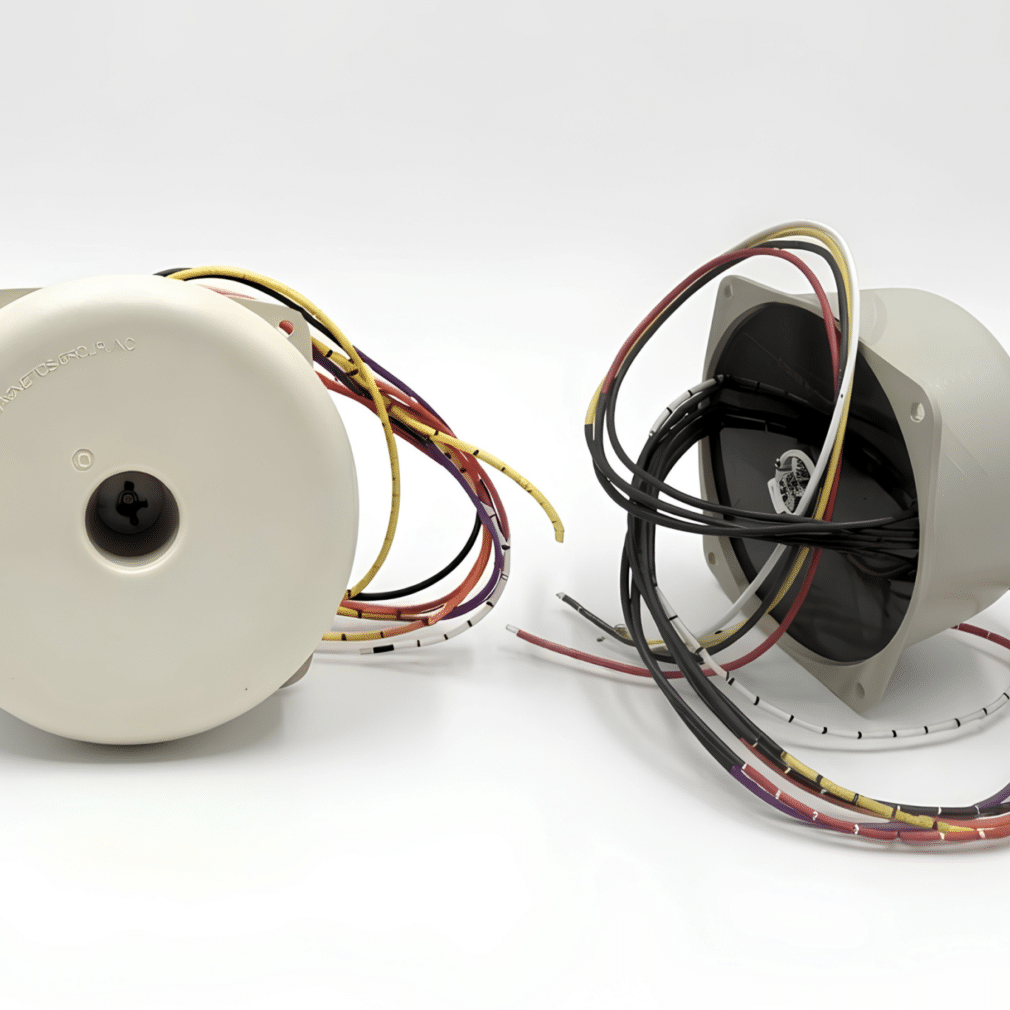
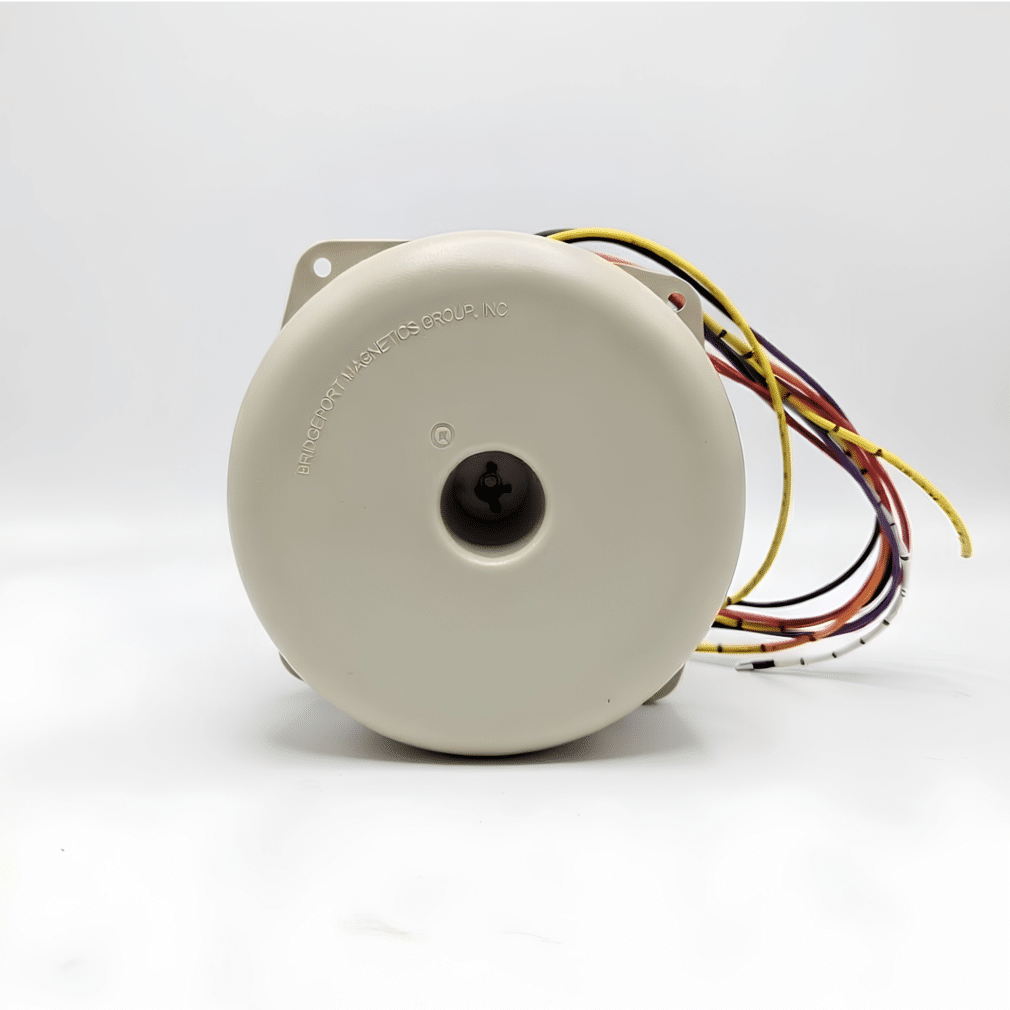
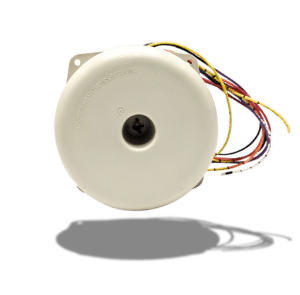
At Bridgeport Magnetics Group, we help boat builders, yacht owners, and marina equipment engineers ensure onboard safety, deliver reliable isolated power, and withstand harsh marine environments. Our Marine Puck isolation transformers deliver superior corrosion resistance, vibration and shock protection, low leakage current, and uncompromising reliability - empowering you to meet the rigorous demands of modern marine electrical systems.

01 · Overview

Complete Shore Power Safety for Yachts, Trawlers & Cruisers

Every boat that connects to shore power faces the same risks: galvanic corrosion damaging underwater metals, stray AC currents creating shock hazards in the water, and dirty dock power degrading sensitive electronics. A marine isolation transformer solves all three by providing complete electrical separation between the dock and your vessel.

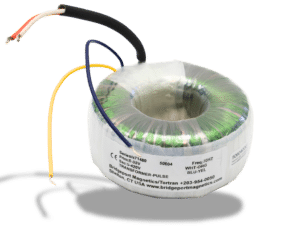
Bridgeport Magnetics Group has designed and manufactured isolation transformers since 1982. Our Marine-Puck line uses toroidal technology to deliver full galvanic and AC isolation while being 50% lighter and more compact than traditional E-I transformers – a critical advantage when every pound and inch of engine room space counts. Whether you’re retrofitting a premium trawler, luxury yacht, or high-end cruiser – or specifying OEM transformers for a new build – the UL 1561 Recognized Marine-Puck MP6 is the professional-grade solution that delivers complete shore power safety and galvanic protection no galvanic isolator can match.

Every US Made Marine-Puck also comes standard with a built-in slow-start thermistor to limit inrush current and ensure reliable performance even on low-voltage docks.

02 · Our Products

Marine Isolation Transformers

03 · competitive adantage

Through our toroidal transformer designs, the Marine-Puck delivers peak efficiency and superior power density in a compact, highly modular package - with extensive configuration options purpose-built for marine shore power.

Integrated Boost Function

Built-in boost configurations (104V to 120V & 208V to 240V) to compensate for low marina voltage.

Toroidal Size Advantage

Toroidal construction delivers up to 50% smaller size and weight than traditional EI transformers, making installation easier in tight engine compartments and saving valuable boat space.

Thermistor Soft-Start

An NTC thermistor is included standard on every MP6, limiting inrush current for clean, nuisance-free startups without extra components or complexity.

Quiet Operation

Toroidal design virtually eliminates magnetostriction hum, providing silent operation that liveaboards and luxury yacht owners consistently praise as a standout feature.

Modular & Configurable

A modular platform with single or dual-unit setups, multiple voltage configurations, and flexible mounting options allows one product family to serve a wide range of boats and electrical services.

04 · Sizing Guide

How to Size a Marine Isolation Transformer

Selecting the correct kVA rating is the most important decision when installing a Marine-Puck isolation transformer. An undersized unit can overheat under load, trip thermal protection, and leave the boat without shore power. While an oversized unit adds unnecessary weight and cost, a reasonable safety margin is always recommended to handle motor-starting surges from air conditioners, watermakers, and other equipment.

Sizing tip: if your vessel’s loads fall between standard sizes, always size up. A slightly oversized transformer runs cooler, handles motor-starting surges more reliably, and lasts longer.

Shore Power ServiceRequired kVAMarine-Puck ModelTypical Use Case
30 A, 120 V single-phase3.6 kVAMP3.6Smaller cruisers, coastal boats
50 A, 120 V6 kVAMP6Mid-size powerboats, trawlers
50 A, 240 V (or 25 A 240 V)6 kVAMP6Light 240 V loads
Dual 50 A, 120/240 V split-phase12 kVADual MP6Larger yachts, heavy A/C & appliance loads
05 · Why You Need One

Why Your Boat Needs a Marine Isolation Transformer

When you plug a shore power cord into a marina pedestal, three conductors connect your boat to the dock: hot, neutral, and ground. That ground conductor bonds your vessel's electrical system to the shore ground and through it, to every other boat on the same dock circuit. This shared ground path is the root cause of the most common and most expensive electrical problems in the marine environment.

Protection Against Galvanic Corrosion

Dissimilar metals immersed in seawater create a natural electrochemical cell. Bronze through-hulls, aluminum outdrives, stainless steel shafts, and zinc anodes all sit at different positions on the galvanic scale. Under normal circumstances, sacrificial zincs manage this corrosion at a controlled rate.

But when your boat shares a ground conductor with the dock and neighboring vessels, the galvanic circuit expands. Your underwater metals may become the sacrificial anode for boats three slips away. The result is accelerated corrosion that can pit through an aluminum outdrive in a single season. This damage can cost thousands of dollars and compromise hull integrity.

A marine isolation transformer breaks this circuit completely. Because energy transfers magnetically through the transformer cores rather than through a direct electrical conductor, there is no galvanic current path between your boat and the dock. Your zincs protect only your boat, as they were designed to do.

Electrical Shock Prevention

AC fault currents from the shore power system can flow through the shared ground conductor, through your boat's bonding system, and into the water surrounding your vessel. This stray AC current is the cause of Electric Shock Drowning (ESD), a hazard that has caused fatalities at marinas across the country.

A boat isolation transformer eliminates your vessel as a potential source of stray current. The shore ground terminates at the transformer. Your boat's grounding system references only the transformer's secondary winding, completely independent of the dock. No AC current from the shore system can reach the water through your vessel's bonding system.

Sensitive Electronics Protection

Modern boats carry substantial electronics: chartplotters, radar, AIS transponders, satellite communication systems, entertainment systems, and networked monitoring equipment. These systems are sensitive to common power quality problems in a marina, such as shore power voltage spikes, sags, harmonic distortion, and ground-loop noise.

A shore power isolation transformer provides a clean, isolated secondary output referenced to your boat's own ground. It blocks common-mode noise, rejects high-frequency interference through its electrostatic shield, and isolates your onboard systems from voltage anomalies originating on the dock or on neighboring vessels. Many boat owners report immediate improvements in audio system hum, radar display clarity, and instrument reliability after installing an isolation transformer.

Regulatory Compliance (NEC, ABYC)

The American Boat and Yacht Council (ABYC) standard E-11 addresses AC and DC electrical systems on boats, and ABYC identifies the isolation transformer as the most effective method of galvanic isolation available. NEC Article 555 (Marinas and Boatyards) establishes requirements for shore power wiring and grounding that an isolation transformer installation must follow.

Installing a marine isolation transformer to ABYC and NEC standards is the highest level of shore power protection you can provide for your vessel. It satisfies the intent of every applicable code and eliminates the failure modes that less comprehensive solutions leave unaddressed.

06 · Installation & Specs

Installation & Technical Specifications

Marine isolation transformer installation is a job that requires knowledge of both electrical systems and marine-specific codes. The following specifications apply to Bridgeport Magnetics marine isolation transformers and should be reviewed with your installer.

Mounting Options

Toroidal marine isolation transformers mount with a single center bolt through the core hole – a simpler and more secure mounting arrangement than the multi-point brackets required by E-I transformer designs. The mounting surface must be structurally sound and able to support the transformer’s weight under the dynamic loads of a vessel in motion (pitching, rolling, wave impact).

Common mounting locations include: 

  • Engine room – Most common location. Provides good structural support and access to main electrical panels. Requires attention to ventilation due to engine compartment heat.
  • Lazarette – Good option for aft installations. Often provides more airflow than the engine room.
  • Under cabin sole – Works well with puck-style low-profile units where vertical clearance is limited.
  • Dedicated electrical compartment – Ideal on larger vessels where a dedicated space can be designed with proper ventilation and access.

Mount the transformer securely with appropriate hardware. Marine-grade stainless steel fasteners are recommended. The transformer must not shift under any sea condition the vessel may encounter.

The primary (shore-side) wiring connects from the shore power inlet to the transformer’s primary terminals. The secondary (boat-side) wiring connects from the transformer’s secondary terminals to the boat’s main electrical panel.

Key Wiring Requirements

  • Wire gauge must be sized for the transformer’s full rated current on both primary and secondary sides. Use ABYC E-11 recommended wire sizing tables for the run length and amperage.
  • All conductors must be marine-grade, tinned copper with proper strain relief at every connection point.
  • The shore ground conductor (green wire) is capped off and insulated at the inlet or transformer entry – it does not pass through to the boat’s electrical system.
  • The boat’s grounding system references the transformer secondary neutral. This creates the complete electrical isolation – the boat’s ground becomes fully independent of shore ground.
  • No bonding of the transformer enclosure is required. The Marine-Puck’s non-metallic, double-insulated design eliminates the need for case grounding.

If you are unfamiliar with marine electrical grounding and bonding, do not guess or experiment with your installation. Incorrect wiring can compromise the isolation transformer’s protection and create safety hazards. We recommend having a qualified marine electrician perform the installation.

Marine-Puck toroidal marine isolation transformers run cooler than traditional E-I designs thanks to their efficient toroidal core and hermetically epoxy-encapsulated construction.

Simple Installation Guidelines

  • Maintain at least 2 inches of clearance on all sides for natural airflow.
  • Engine room (most common location): Provide good ventilation; no dedicated fan is typically required.
  • Lazarette or dedicated compartments: Usually offer excellent natural cooling.
  • Under cabin sole: Well-suited for the low-profile puck design with adequate airflow.

The vacuum-impregnated windings and solid epoxy potting provide effective heat dissipation. Follow standard ABYC E-11 ventilation practices — in nearly all real-world installs, natural convection is sufficient for reliable, long-term operation of your marine isolation transformer.

07 · Isolator vs Transformer

Marine Isolation Transformer vs Galvanic Isolator

Boat owners who are considering shore power protection have two common options: a galvanic isolator and a marine isolation transformer. Both manage galvanic corrosion, but they work on different principles and provide different levels of protection. The primary difference is that the galvanic isolator addresses one specific problem: low-voltage DC galvanic current. The isolation transformer addresses that problem and every other electrical risk that a shore power connection creates, providing more thorough protection and peace of mind.

Key Differences

A Galvanic Isolator

is a small inline device (typically a pair of diodes or a diode bridge) installed in series with the shore power ground conductor. It blocks low-voltage DC galvanic currents below approximately 1.2 volts. This is enough to interrupt the typical 0.5V-0.9V galvanic potential between dissimilar metals on connected boats. It costs $150-$400 installed, weighs 1-3 pounds, and takes minutes to wire in.

A Marine Isolation Transformer

provides complete electrical separation. The shore power feeds the transformer's primary winding. The boat's electrical system connects to the secondary winding. There is no electrical conductor between the two: energy transfers magnetically. The shore ground terminates at the transformer, and the boat's grounding system becomes fully independent.

Protection FeatureGalvanic IsolatorMarine Isolation Transformer
Blocks galvanic DC corrosion currentsYes (below ~1.2 V)Yes (complete isolation)
Blocks AC stray / fault currentNoYes (complete isolation)
Eliminates Electric Shock Drowning riskNoYes
Cleans power for sensitive electronicsNoYes
Voltage transformation capabilityNoYes
Silent failure riskYes (capacitor types)No
Typical installed cost$150–$400$1,500–$5,000+
Typical weight1–3 lbs30–120 lbs

How to Choose Galvanic Isolator vs Marine Isolation Transformer

Galvanic Isolator

● Your boat has a fiberglass hull with minimal underwater metal
● You connect to shore power infrequently or for short durations
● The marina has modern GFCI-protected wiring
● You carry no sensitive electronics beyond basic navigation
● Budget is the primary constraint.

Marine Isolation Transformer

● Aluminum hull or aluminum outdrive: aluminum corrodes aggressively from both galvanic and stray AC currents and a galvanic isolator blocks only the galvanic component
● Extended dock time: liveaboards and seasonal slip holders accumulate corrosion damage continuously; the cost of an isolation transformer is less than one season of underwater metal replacement
● Sensitive electronics: navigation systems, radar, satellite communication, and entertainment systems all perform better on isolated power
● Multiple shore power connections: boats with two shore power inlets create complex ground loop paths that a galvanic isolator cannot fully handle
● Older or poorly maintained marinas: an isolation transformer protects your vessel from questionable dock wiring and problems that originate anywhere on the dock circuit
● Safety priority: if eliminating your vessel's contribution to Electric Shock Drowning risk is important to you, choose an isolation transformer

08 · Standard & Custom Models

Our Marine Isolation Transformer Line

Bridgeport Magnetics designs and manufactures the Marine-Puck marine isolation transformers in our 45,000 sq ft facility in Shelton, Connecticut. Our standard line consists of the MP3.6, MP6, and Dual MP6 models, providing reliable shore power solutions from a single 30-amp inlet on coastal cruisers to dual 50-amp service on larger motor yachts and premium vessels. All units are UL 1561 Recognized and built to CSA, EN 61558, and IEC 61558 standards.

Standard Marine Isolation Transformers

Our standard Marine-Puck isolation transformers use toroidal core construction for maximum weight savings and minimum footprint. Each unit includes an electrostatic shield between primary and secondary windings for superior common-mode noise rejection. Core and coil assemblies are vacuum-impregnated for moisture resistance and vibration damping – essential qualities in the marine environment.

Every Marine-Puck also comes standard with two important features:

  • Slow-start thermistor – limits high inrush current at energization, protecting breakers and eliminating nuisance trips.
  • Built-in boost capability – provides reliable performance even when shore power voltage is low or marginal.

Standard models include:

  • MP3.6: 3.6 kVA for 30-amp, 120V single-phase service
  • MP6: 6 kVA for 50-amp 120V or 25-amp 240V applications
  • Dual MP6: 12 kVA for dual 50-amp, 120/240V split-phase service
  • Custom MP12: 12 kVA for 50-amp, 120/240V split-phase service

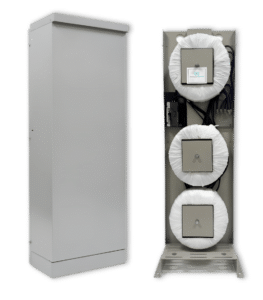
Bridgeport Magnetics designs and manufactures custom toroidal marine isolation transformers in single-phase and 3-phase configurations, ranging from 3 kVA to 375 kVA.

Engineered with premium toroidal core construction, electrostatic shielding, and vacuum-impregnated windings, these units deliver complete galvanic isolation, ultra-low leakage current, and superior corrosion protection – all built in our Shelton, CT facility with UL 1561, CSA, EN 61558, and IEC 61558 compliance where required.

Ideal for Marina, Dock-Side & Military Applications Our custom transformers excel in:

  • High-capacity marina dock pedestals and entire dock sections
  • Superyacht, megayacht, and premium trawler docks
  • Military vessels and patrol boats requiring reliable shore power isolation
  • Marina electrical upgrades and voltage step-up / isolation projects
Marine isolation Transformer

Reliable Marine Isolation, Manufactured to Standards

25A, 30A, 50A Marine Isolation Transformers — UL 1561 Recognized. Designed for compliance with ABYC E-11 recommendations for isolation transformers when installed according to the supplied wiring diagrams (including secondary neutral-to-ground bond).

010 · FAQ

Frequently Asked Questions

Do I need a marine isolation transformer?

If your boat connects to shore power, yes, you need a marine isolation transformer. A marine isolation transformer protects against galvanic corrosion, AC stray current corrosion, and electrical shock hazards in the water around your vessel. It also provides clean, isolated power for sensitive onboard electronics, including navigation, communication, and entertainment systems. The American Boat and Yacht Council (ABYC) identifies the isolation transformer as the most effective galvanic isolation method available for shore-connected vessels. While a galvanic isolator provides partial protection at lower cost, the isolation transformer is the only device that addresses the full range of shore power risks.

The size depends on your shore power amperage and voltage. Multiply the shore power voltage by the amperage to get the minimum VA rating, then add a 20% safety margin for motor starting surges from air conditioners, refrigeration, and watermakers.

For the most common configurations: 

  • 30-amp, 120V service: 3.6 kVA minimum, 4.5 kVA recommended
  • 50-amp, 120/240V service: 12 kVA minimum, 15 kVA recommended
  • Dual 50-amp, 120/240V service: 24 kVA minimum, 30 kVA recommended

If your loads include multiple large motor-driven appliances (multiple air conditioning units, a watermaker, and a washer/dryer), consider sizing up an additional step beyond the 20% margin. 

A galvanic isolator is a simple diode-based device that blocks only low-voltage DC galvanic currents below approximately 1.2 volts. It remains in the ground conductor path and allows AC fault currents to pass through. It does not protect against stray AC current corrosion, does not eliminate Electric Shock Drowning risk, and does not improve power quality for onboard electronics.

A marine isolation transformer provides complete electrical separation between the shore power system and the boat. There is no direct electrical connection between primary and secondary windings — energy transfers magnetically through the transformer core. This blocks all galvanic DC currents, all AC stray currents, and all common-mode electrical noise. The boat’s grounding system becomes fully independent of the shore ground. The isolation transformer provides superior protection for sensitive electronics, is essential for aluminum-hulled vessels and boats with multiple shore power connections, and eliminates your vessel as a potential source of stray current in the marina environment.

Installation is possible for experienced boat electricians who are familiar with ABYC E-11 standards and NEC Article 555 requirements. However, Bridgeport Magnetics recommends using a certified marine electrician for installation. The critical aspects include: proper ventilation planning to prevent overheating, secure mounting that withstands marine dynamic loads, correctly sized wiring on both primary and secondary sides, and — most importantly — proper grounding and bonding configuration per NEC Article 555.

The grounding configuration is where most DIY installations go wrong. The boat’s ground must reference the transformer secondary, not the shore ground. The shore ground terminates at the transformer. If this is done incorrectly, the isolation transformer provides no protection, and the installation may create new safety hazards. A qualified marine electrician ensures the job is done right the first time. Contact our engineering team if you need help finding a qualified installer in your area or have technical questions about your planned installation.

Shopping Cart

Product Inquiry Form