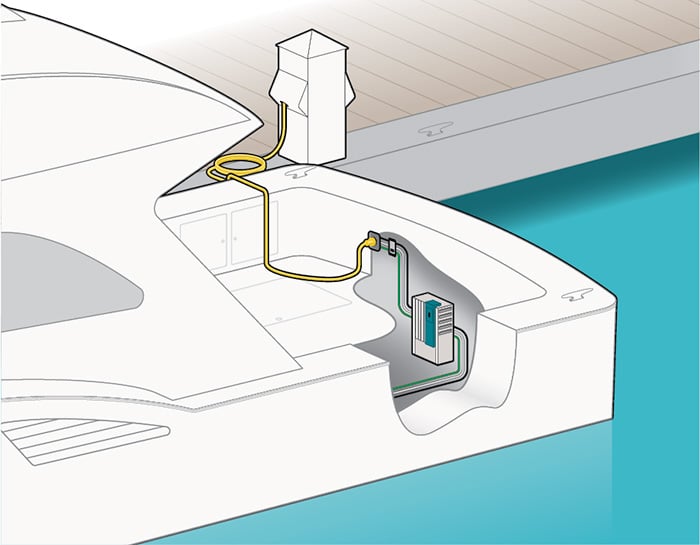
Every boat that plugs into shore power requires protection, because the dock’s electrical system and your boat’s underwater metals are now connected through the ground wire. That connection creates a pathway for galvanic corrosion, stray current damage, and even electrical shock hazards in the water around your vessel. While electrical shocks are the worst-case scenario, no boat owner wants to be caught unaware.
To protect against this common connection, boat owners can choose between a galvanic isolator and a marine isolation transformer. A galvanic isolator is a small, inexpensive inline device that blocks low-voltage galvanic currents. A marine isolation transformer provides complete electrical separation between shore power and your boat’s onboard system.
Most boat owners are familiar with a galvanic isolator, which offers protection against corrosion. However, a marine isolation transformer protects against corrosion, stray current damage, and the risk of electrical shocks. Learn the main differences, and when each is the right solution, to make the right investment for your boat. Making the right choice the first time can save you thousands of dollars in hull and drive damage, protect the people on and around your vessel, and keep your onboard electronics running cleanly.
Why Shore Power Connection Creates Risk (And Requires Protection)
When your boat connects to a marina pedestal, three conductors run down the shore power cord: hot, neutral, and ground. The ground conductor bonds your boat’s electrical system to the shore ground, and through it, to every other boat on the same dock circuit. That ground connection creates two distinct problems boat owners need to be aware of.
Galvanic Corrosion. Different metals (bronze through-hulls, aluminum outdrives, stainless steel shafts) in contact with seawater create a natural electrochemical cell. When boats share a common ground conductor, the most active (least noble) metal on any connected vessel becomes the sacrificial anode for the entire dock circuit. Your aluminum outdrive might be protecting the bronze propeller on a boat three slips away. The result is accelerated corrosion that can pit through metal components in a single season.
Stray Current Leakage. AC fault currents from the shore power system can flow through the ground conductor, into the seawater via your boat’s bonding system, and back to shore through the water. These stray AC currents corrode underwater metals far faster than galvanic currents. They also present a shock hazard to swimmers. The phenomenon known as Electric Shock Drowning (ESD) has been linked to stray AC current in marina environments.
Galvanic Isolator vs. Marine Isolation Transformer
How a Galvanic Isolator Works
A galvanic isolator is a pair of diodes (or a diode bridge) wired in series with the shore power ground conductor. It is a small device — typically the size of a paperback book — installed in the shore power circuit near the boat’s inlet.
What it blocks: Low-voltage DC galvanic currents below approximately 1.2 volts (the forward voltage drop of two silicon diodes in series). This is sufficient to block the typical 0.5V-0.9V galvanic potential difference between dissimilar metals on connected boats.
What it passes: AC fault currents and any DC current above the diode threshold. The ground conductor remains fully functional for safety purposes. In the event of an AC ground fault on your boat or any connected vessel, fault current flows through the galvanic isolator to the shore ground, allowing the breaker to trip normally.
Advantages:
- Low cost ($150-$400 installed)
- Small, easy to install
- No ongoing maintenance (solid-state device)
- Does not affect the shore power ground path for AC fault protection
Limitations:
- Only blocks galvanic (DC) currents below the diode threshold
- Does not block AC stray current leakage
- Does not protect against shore power voltage anomalies (spikes, sags, frequency variations)
- Does not provide electrical isolation between the boat and dock
- Capacitor-type galvanic isolators can fail silently, leaving the boat unprotected
- ABYC standard A-28 requires a status monitor on galvanic isolators to detect failure
A galvanic isolator is the minimum protection for any boat connected to shore power. But for vessels with aluminum hulls, multiple shore power connections, sensitive electronics, or a history of corrosion problems, the minimum may not be enough.
How a Marine Isolation Transformer Works
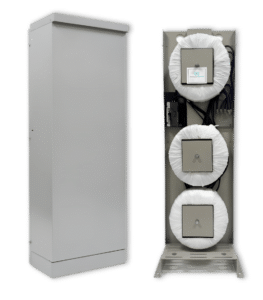
A marine isolation transformer is an entirely different approach to shore power connection protection. Instead of filtering the ground conductor, it eliminates the direct electrical connection between shore power and the boat entirely.
An isolation transformer has a primary winding (connected to shore power) and a secondary winding (connected to the boat’s electrical panel). There is no electrical conductor between the two windings. Energy transfers magnetically through the transformer core. The shore ground conductor terminates at the transformer. The boat’s grounding system references only the boat’s own ground, completely independent of the dock.
What it blocks: Everything. All galvanic DC currents. All AC stray currents. All common-mode noise. All shore power ground faults. The boat is electrically isolated from the dock.
What it provides:
- Complete galvanic isolation (no DC path between boat and shore ground)
- Complete AC isolation (no stray AC current can flow between shore and boat)
- Power conditioning (the transformer’s secondary output is a clean, re-generated sine wave referenced to the boat’s own ground)
- Voltage transformation capability (a 240V shore supply can feed a 120V boat system, or vice versa)
- Common-mode noise rejection (the electrostatic shield between windings blocks high-frequency noise from shore power)
Advantages:
- Complete protection against galvanic corrosion and stray current corrosion
- Eliminates Electric Shock Drowning (ESD) risk from your vessel
- Cleans up shore power for sensitive electronics (navigation systems, communication equipment, entertainment systems)
- Allows voltage transformation between shore and boat
- No silent failure mode: the transformer either works or it does not
- Long service life with zero maintenance (no moving parts, no components that degrade)
Limitations:
- Higher cost than a galvanic isolator ($1,500-$5,000+ depending on rating)
- Heavier and physically larger: a 12kVA unit weighs 80-120 pounds
- Requires proper ventilation (transformers generate heat under load)
- Installation is more involved (dedicated mounting, appropriately sized wiring, ventilation considerations)
- Adds slight efficiency losses (typically 3-5% at full load)
Side-by-Side Comparison
| Feature | Galvanic Isolator | Marine Isolation Transformer |
|---|---|---|
| Blocks galvanic (DC) corrosion | Yes (below ~1.2V) | Yes (complete) |
| Blocks AC stray current | No | Yes (complete) |
| Eliminates ESD risk | No | Yes |
| Protects sensitive electronics | No | Yes |
| Voltage transformation | No | Yes |
| Typical cost (installed) | $150-$400 | $1,500-$5,000+ |
| Weight | 1-3 lbs | 40-120 lbs |
| Installation complexity | Simple | Moderate |
| Maintenance | Monitor for failure | None |
| Silent failure risk | Yes (capacitor types) | No |
When to Use a Galvanic Isolator
A galvanic isolator should always meet ABYC A-28 standards and include a status monitor to alert you if the device fails. A galvanic isolator may be enough for your vessel if:
- Your boat has a fiberglass hull with minimal underwater metal
- You connect to shore power infrequently or for short durations
- The marina has modern, well-maintained wiring with GFCI protection
- You have no sensitive electronics beyond basic navigation
- Budget is the primary constraint
- Your vessel is small (under 30 feet) with a single 30-amp shore power connection
When to Use a Marine Isolation Transformer
A marine isolation transformer may be the right investment for your vessel if any of these apply:
- Aluminum hull or outdrive. Aluminum is highly susceptible to both galvanic and stray current corrosion. A galvanic isolator alone cannot protect against the AC stray currents that cause the most aggressive pitting on aluminum surfaces.
- Multiple shore power connections. Boats with two shore inlets (e.g., 50A + 30A) create complex ground loop paths. An isolation transformer on each inlet eliminates these loops entirely.
- Sensitive electronics. If your boat carries high-end navigation, radar, communication, or entertainment systems, the clean power from an isolation transformer prevents the ground noise, voltage spikes, and common-mode interference that cause intermittent faults and premature equipment failure.
- Extended dock time. Liveaboards and boats that stay connected to shore power for weeks or months at a time accumulate corrosion damage continuously. The cost of an isolation transformer is often less than one season of underwater metal replacement.
- Older or poorly maintained marinas. If the dock wiring is questionable, an isolation transformer protects your vessel from problems that originate on other boats or in the marina’s electrical distribution.
- Safety priority. Electric Shock Drowning is a real risk in marina environments. An isolation transformer eliminates your vessel as a potential source of stray current in the water.
Sizing a Marine Isolation Transformer
If you decide on an isolation transformer, you want to ensure the proper size. An undersized transformer will overheat under load. An oversized transformer adds unnecessary weight and cost.
The basic formula is:
VA Rating = Shore Power Voltage x Shore Power Amperage x Safety Factor
Common sizing examples for marine isolation transformers:
| Shore Power Service | Voltage | Amperage | Minimum VA | Recommended VA (with 20% margin) |
|---|---|---|---|---|
| 30A / 120V | 120V | 30A | 3,600 VA | 4,500 VA |
| 50A / 120/240V | 240V | 50A | 12,000 VA | 15,000 VA |
| Dual 50A / 240V | 240V | 100A | 24,000 VA | 30,000 VA |
The 20% margin accounts for motor starting surges from air conditioning compressors, refrigeration, and watermakers, which draw 3-6 times their running current for the first few cycles.
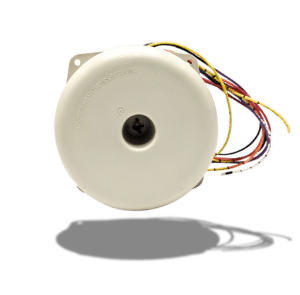
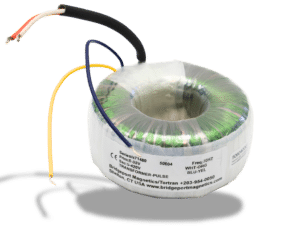
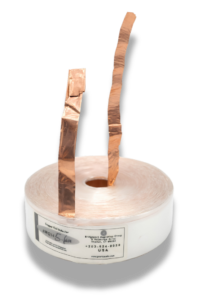
Bridgeport Magnetics manufactures custom toroidal isolation transformers for marine applications from 3kVA to 50kVA. The toroidal design is well-suited for marine use because it is 40-50% lighter than E-I transformer equivalents, which offers a meaningful advantage when the transformer must fit in an engine room or lazarette with limited space and load capacity.
Installation Considerations
Marine isolation transformer installation should be done by a qualified marine electrician familiar with ABYC E-11 (AC and DC Electrical Systems on Boats) and NEC Article 555 (Marinas and Boatyards). Key considerations include:
- Ventilation. A 12kVA transformer at full load dissipates approximately 400-600 watts of heat. The installation space must allow adequate airflow to prevent overheating. Forced ventilation may be required in tight compartments.
- Mounting. Toroidal transformers mount with a single center bolt. The mounting surface must be structurally sound and able to support the transformer’s weight under the dynamic loads of a vessel in motion.
- Wiring. The shore-side (primary) wiring and boat-side (secondary) wiring must be appropriately sized for the transformer’s rated current. All connections must be marine-grade, tinned copper with proper strain relief.
- Grounding. The boat’s grounding system must be reconfigured to reference the transformer secondary rather than the shore ground. This is the single most critical aspect of the installation. Incorrect grounding defeats the purpose of the isolation transformer.
- Breaker coordination. The transformer’s inrush current at energization can be 5-10 times the rated current for the first few cycles. The shore-side breaker must be rated to handle this inrush without nuisance tripping.
Galvanic Isolator vs Marine Isolation Transformer: Ready to Make the Investment?
A galvanic isolator is the minimum protection every boat connected to shore power should have. It costs little, installs easily, and blocks the most common form of galvanic corrosion. A marine isolation transformer provides complete protection against galvanic corrosion, stray current corrosion, electrical shock hazards, and power quality problems. It costs more and weighs more. But for boats with aluminum components, sensitive electronics, extended shore power connections, or safety-conscious owners, it is the only solution that addresses every risk that a shore power connection creates.
If you are unsure which solution fits your vessel, Bridgeport Magnetics engineers can help you evaluate your shore power configuration and recommend the right approach. Request a quote for a marine isolation transformer or call (203) 954-0050 to speak with our engineering team. All marine isolation transformers are designed and manufactured in our Shelton, CT facility using toroidal transformer technology for maximum weight savings and efficiency.
Frequently Asked Questions
Do I need a marine isolation transformer or a galvanic isolator?
It depends on your vessel and usage. A galvanic isolator is adequate for fiberglass boats with minimal underwater metal that connect to shore power occasionally. A marine isolation transformer is recommended for boats with aluminum hulls or outdrives, sensitive electronics, multiple shore power connections, or extended dock time. The isolation transformer provides complete protection against both galvanic and stray current corrosion, while a galvanic isolator only blocks low-voltage DC galvanic currents.
Can I use both a galvanic isolator and an isolation transformer?
No. If you install an isolation transformer, a galvanic isolator is unnecessary and should not be installed in the circuit. The isolation transformer provides complete electrical separation between shore power and the boat. There is no shared ground conductor for the galvanic isolator to act upon.
How heavy is a marine isolation transformer?
Weight depends on the VA rating. A 3.6kVA unit for 30-amp service typically weighs 30-40 pounds. A 12kVA unit for 50-amp service weighs 80-120 pounds. Bridgeport Magnetics uses toroidal transformer construction, which is 40-50% lighter than equivalent E-I designs. This makes a significant difference in marine applications where every pound matters.
Will a marine isolation transformer reduce electrical noise on my boat?
Yes. An isolation transformer eliminates common-mode noise from the shore power ground, blocks high-frequency interference through its electrostatic shield, and provides a clean, re-generated secondary output referenced to the boat’s own ground. Many boaters notice immediate improvements in audio system hum, radar display clarity, and electronic instrument reliability after installing an isolation transformer.
What certifications should a marine isolation transformer have?
A marine isolation transformer should be UL listed and built to meet ABYC E-11 standards for marine electrical systems. Bridgeport Magnetics marine isolation transformers are designed and manufactured in the USA with UL, CSA, EN, and IEC certifications available depending on the application requirements.