When responding to underground cable faults, linemen are often required to work quickly in difficult conditions. In many cases, this includes carrying equipment through backyards, across uneven terrain, up stairs, or into locations where vehicles cannot reach. This reality has made one person temporary power restoration an increasingly important capability for modern utility crews.
Traditional temporary power restoration equipment is frequently heavy and cumbersome, often requiring two or more people to transport and set up. In contrast, newer lightweight designs allow a single lineman to handle the entire job. This shift improves response times, reduces physical strain, and gives crews more flexibility during outages.
Why One Person Temporary Power Restoration Matters
Linemen frequently work in situations where immediate help is not available. Being able to complete a temporary power restoration job independently offers several real-world advantages:
- Faster response when working solo or with limited crew availability
- Reduced physical fatigue during long shifts or multiple jobs
- Better ability to access hard-to-reach locations without waiting for additional support
- Improved overall crew efficiency and safety
Utilities that provide their crews with equipment designed for one-person operation often see measurable improvements in outage response performance.
Challenges with Traditional Heavy Equipment
Many older temporary power restoration units were not designed with one-person use in mind. These heavier units commonly present the following challenges:
- High weight that makes carrying or rolling difficult for a single person
- Large size that limits access in tight spaces or residential backyards
- Longer setup times due to their bulk and complexity
- Increased physical strain, which can contribute to fatigue and safety risks over time
In today’s environment, where crews are often asked to handle more calls with fewer people, these limitations can slow down restoration efforts.
Benefits of Lightweight One Person Temporary Power Restoration
Modern lightweight temporary power restoration devices are specifically engineered to be carried and operated by one person. The main benefits include:
- Significantly reduced weight (many models under 100 lbs)
- Balanced and compact designs that are easier to carry
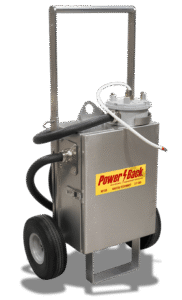
- Wheeled options with durable, never-flat tires
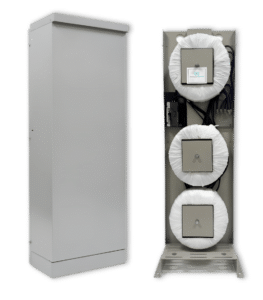
- Modular systems that can be broken down into lighter, manageable components
- Quick-connect features that reduce overall setup time
These improvements allow linemen to work more efficiently and with less physical stress, which is especially valuable during major storm events or extended outage periods.
| Benefit | How One Person Lightweight Devices Help | Operational Impact |
|---|---|---|
| Faster Response | Single lineman can transport and set up quickly | Reduced outage duration |
| Lower Physical Strain | Much lighter and better balanced than older units | Less fatigue and better crew retention |
| Better Access | Modular or wheeled designs reach difficult locations | More jobs completed per shift |
| Improved Safety | Less need for multiple people to maneuver heavy equipment | Lower risk of injury |
| Greater Flexibility | One person can handle more service calls independently | Higher crew productivity |
Quick Benefits Summary
Real-World Scenarios Where One-Person Capability Matters
One-person temporary power restoration is especially valuable in these common situations:
- Backyard or rear-lot outages where vehicle access is limited
- Multi-story buildings or locations requiring equipment to be carried upstairs
- Storm recovery when crews are stretched thin across many jobs
- Rural or remote areas where additional help may take time to arrive
- Night or weekend calls when staffing is reduced
In each of these scenarios, the ability for one lineman to complete the job without waiting for support can make a meaningful difference.
Lightweight vs Traditional Temporary Power Restoration Equipment
| Feature | Traditional Heavy Units (e.g. older Servisavor-style) | Modern Lightweight Units (PowerBack Lite & Trident) | Advantage |
|---|---|---|---|
| Weight | Often 150+ lbs | As low as 91 lbs | Modern |
| Mobility | Difficult in yards and rough terrain | Wheeled or fully modular hand-carry | Modern |
| Crew Requirements | Usually requires 2+ people | Designed for one lineman | Modern |
| Setup Time | Longer | Typically 20–30 minutes | Modern |
| Physical Strain on Crew | High | Significantly reduced | Modern |
| Access to Difficult Locations | Limited | Excellent | Modern |
| Durability & Features | Basic | Modern safety features and better build quality | Modern |
How PowerBack Lite and Trident Support One-Person Work
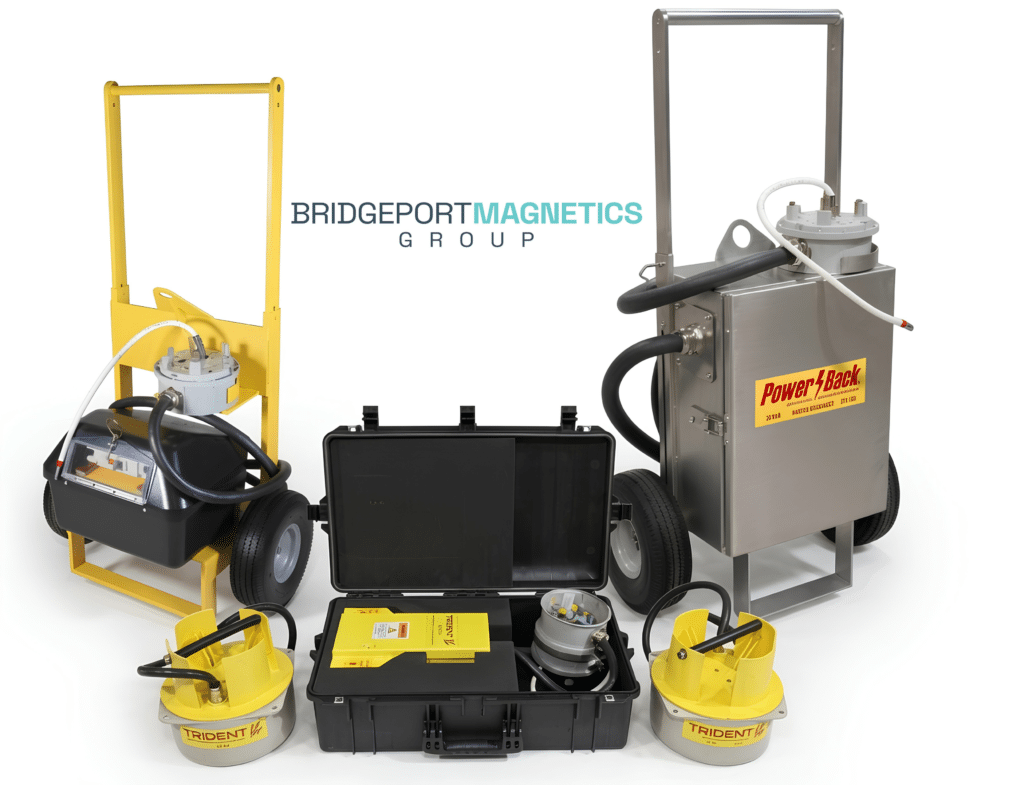
Bridgeport Magnetics developed the PowerBack Lite and Trident systems with direct input from working linemen to make one person temporary power restoration practical and reliable.
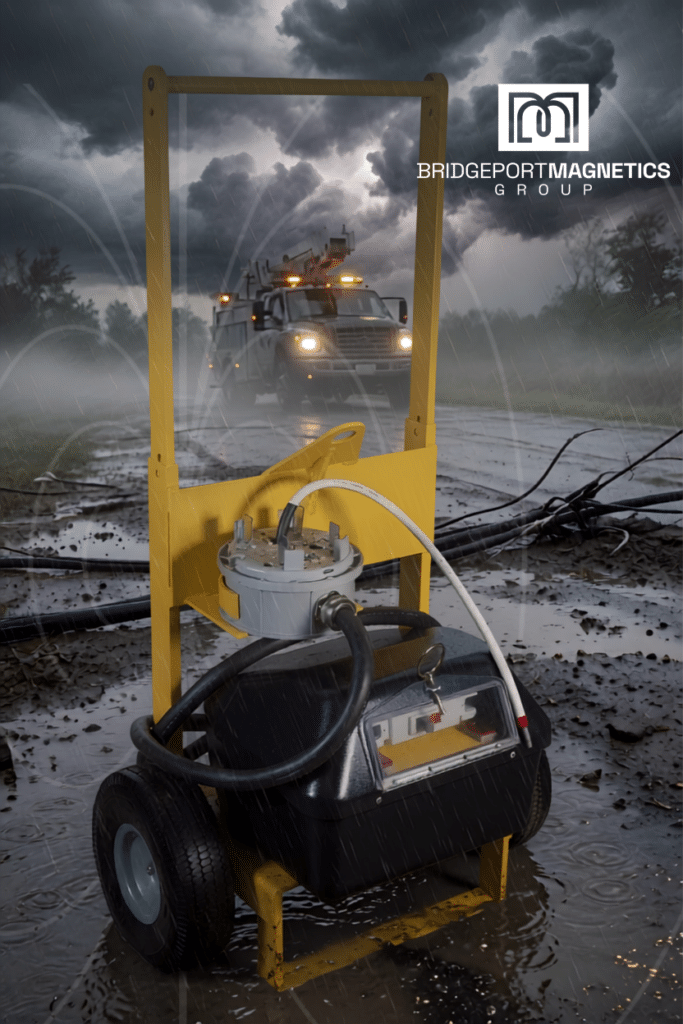
- PowerBack Lite models are among the lightest wheeled temporary power restoration devices available. They roll easily on never-flat tires and can be positioned by one person in most residential and light commercial settings.
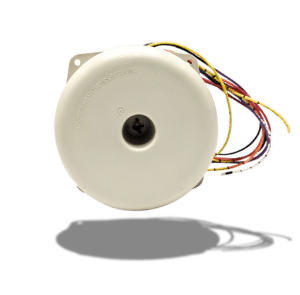
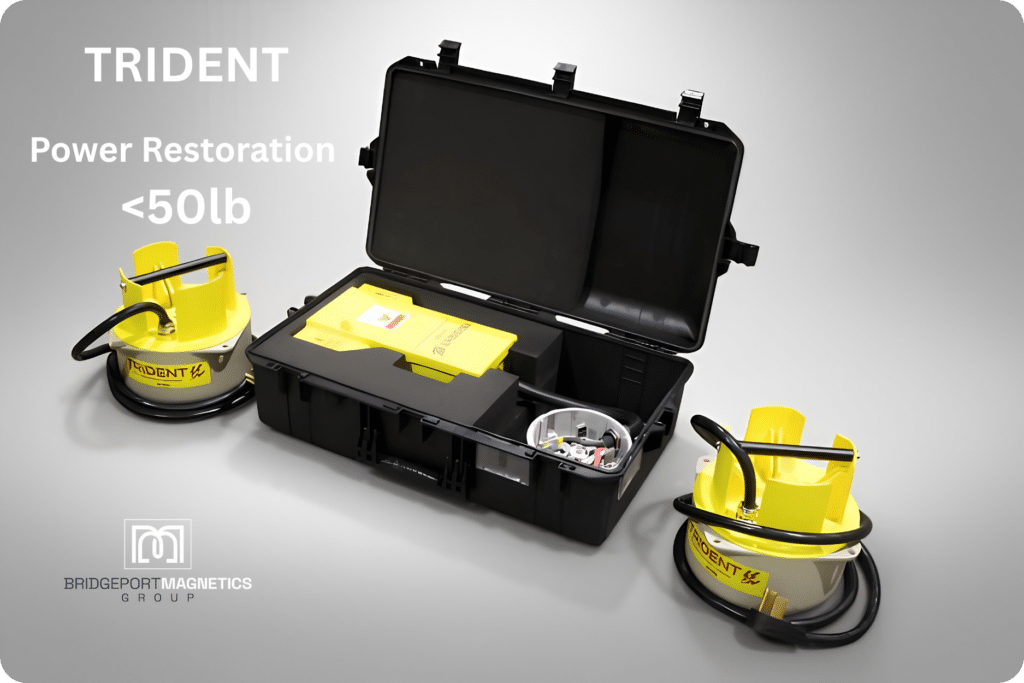
- Trident is a modular, hand-carry system specifically built for locations where wheeled units cannot reach. A single lineman can carry the components through gates, up stairs, or across rough or flooded terrain.
Both systems include quick single-turn meter adapters and are built with weather-resistant materials for daily field use.
Field Perspective on Older Units
Many linemen are familiar with older-style units that are commonly referred to as Servisavor or similar heavy wheeled carts. While these devices have been used for years, their weight and size can make them difficult to manage in certain situations.
As utilities face increasing pressure to respond faster with smaller crews, many are supplementing or replacing these heavier units with lighter, more maneuverable options. The ability to complete a temporary power restoration job with one person has become a meaningful operational advantage in today’s environment.
FAQ: One Person Temporary Power Restoration for Linemen
FAQ
What does “one person temporary power restoration” mean? It means a single lineman can transport, set up, and operate a temporary power restoration device without needing help from additional crew members.
Why is one person capability becoming more important? Utilities are often asked to handle more work with fewer people. Equipment that allows one lineman to complete a job independently improves response times and reduces physical strain on crews.
How much lighter are modern units compared to older Servisavor-style equipment? Many modern lightweight units weigh roughly half as much as older heavy models, making them significantly easier for one person to handle.
Can the PowerBack Lite be used by one person? Yes. The PowerBack Lite is designed to be rolled and positioned by a single lineman in most typical residential and light commercial settings.
When would you still use a heavier traditional unit? Some crews prefer heavier units for very large services or when maximum capacity is needed and access is not difficult. However, many utilities are shifting toward lighter equipment for everyday use.
Is the Trident system truly one-person friendly? Yes. The Trident was specifically designed as a modular, hand-carry system so one lineman can transport and install it in locations where wheeled units cannot go.
Do lightweight devices sacrifice capacity or durability? No. Modern lightweight units like the PowerBack and Trident are built with durable materials and offer competitive capacity ranges while being much easier to handle than older equipment. One Person Temporary Power Restoration for Linemen