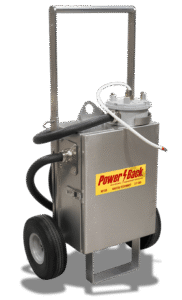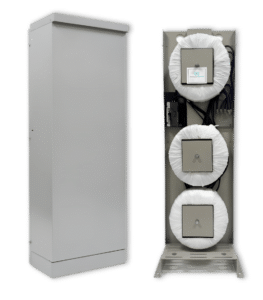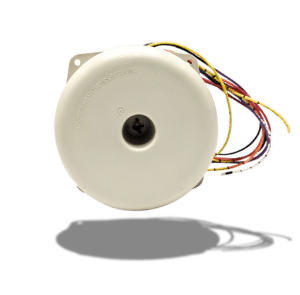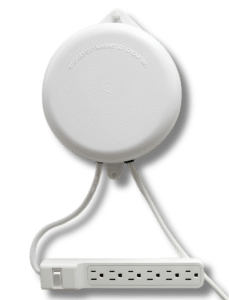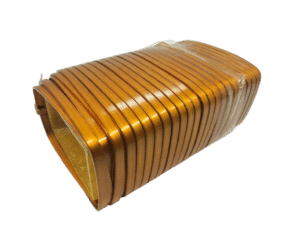
A 40kVA or 50kVA Service Saver is the unit crews reach for when the outage is not one house. The failure is a missing hot or a missing neutral on a multi-meter cabinet, a connection box with a bus, or a small bank of meters fed from one incoming secondary.
A 15kVA or 20kVA cart restores one socket. A 40kVA-class unit restores the bank. A 50kVA PowerBack restores the bank when the combined load, the pedestal, or the unknown diversity is larger than that.
This job is already in the field. A municipal and cooperative crew put it in one sentence: they use the larger unit to make up a leg in a multi-meter facility, as long as the site has a bus bar and a connection cabinet feeding the meters. The market still talks about that work as if only a 40kVA Servisavor exists. It does not. The current-generation tool for the same landing is a PowerBack.

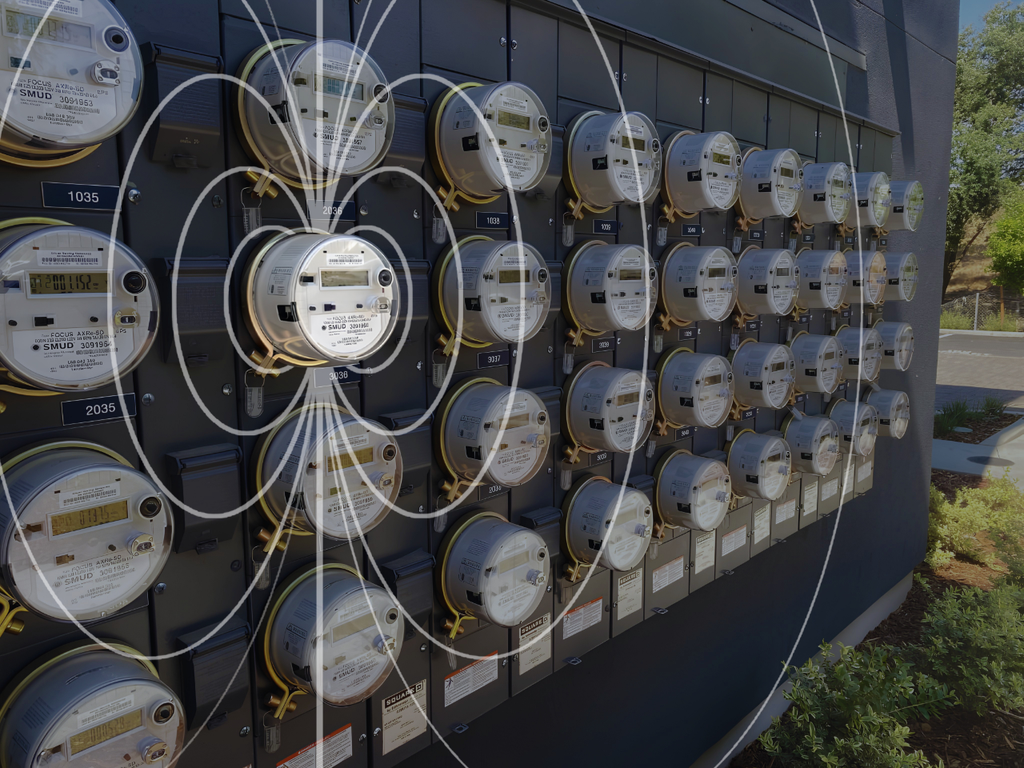
What a multi-meter install looks like
A multi-meter facility is a building or pad where several revenue meters share one incoming secondary. Common layouts:
- Apartment or condo meter packs
- Small commercial strips
- Municipal buildings with a row of meters
- Connection cabinets that land the utility secondary on a bus, then feed tenant meters
The failure is usually not inside one meter socket. It is an open hot or an open neutral on the incoming secondary — in the cable, or at the cabinet landing. Every meter on that bus goes dark, or goes single-legged, at the same time.
If the cabinet has a bus and a legal place to land restoration leads, the crew rebuilds the missing voltage once and brings the whole bank back.
Why a single-home unit fails here
| Install | What is out | Unit that fails | Unit that fits |
|---|---|---|---|
| One house, one meter | One 150A or 200A service | None, if a Lite is on the truck | 15kVA or 20kVA Lite |
| Two or three meters on a small pack | Combined load above one house | Lite 15–20kVA | 40kVA-class Service Saver |
| Full multi-meter cabinet with a bus | Incoming secondary missing a leg | Any single-socket unit | 40kVA-class or 50kVA PowerBack |
| Dense meter bank or unknown load | High combined current | 40kVA on the edge | 50kVA PowerBack |
The 40kVA Service Saver exists because 40kVA became the market default for this class of work. Servisavor defined that size. SNC Restore-Lite sits in the same conversation. A modern PowerBack is the same job — built to land at the cabinet without a meter adapter, and sized at 50kVA when the bank is larger than the old 40kVA default.
How the multi-meter restoration works
- Confirm the open conductor at the cabinet, not only at one tenant meter.
- Confirm the cabinet has a bus bar and a legal landing point.
- Connect the PowerBack to the remaining good conductors. Two of the three wires still have to be good.
- Rebuild the missing hot, or the missing neutral, for the bus — not both at once.
- Restore every meter on that cabinet.
- Schedule the underground or incoming-secondary repair as planned work.
No temporary overhead jumpers across a parking lot. No neighbor tap that wrecks metering. No overnight dig unless the site is unsafe.
How the 50kVA PowerBack actually connects
Unlike the 15–30kVA PowerBack models, the 50kVA does not use a meter adapter. It lands three individual conductors on the utility secondary through a Cam-Lok disconnect kit. Nine cable assemblies ship with each unit.
The unit side never changes
Three 10-foot leads come off the 400A breaker inside the cart:
- Black 1/0 AWG — one 120V leg. Ring lug (Hoffman-1/06R1) crimped to the breaker. Black heat shrink and a black Cam-Lok.
- Red 1/0 AWG — the other 120V leg. Same lug and heat shrink, red Cam-Lok.
- Neutral 3/0 AWG — jacket stripped and multi-crimped at the breaker. White Cam-Lok.
A Cam-Lok is a twist-lock single-pole plug. Line up, push, twist. The 10-foot leads stay on the breaker. Only the last five feet change with the job.
Two field ends — pick from what is in the box
Option A — Homac Flood-Seal whip. A 5-foot cable with a Cam-Lok on one end and a Homac Flood-Seal FS-95 connector on the other (CFG1CS on 1/0, CFG3/OCS on 3/0). The rubber boot seals around the cable. The metal body bolts onto an existing Homac-style multi-port bar. This is the pedestal and hand-hole landing.
Option B — tinned-end whip. A 5-foot cable with a Cam-Lok on one end and a bare tinned conductor on the other. It goes into a set-screw port, a lay-in lug, or a compression lug bolted to a bus or a pad-mount secondary spade. This is the multi-meter cabinet landing this article is about.
Which whip to use
| What you see | Which whip to use |
|---|---|
| Pedestal or hand-hole with a Homac / Flood-Seal bar | Option A: Flood-Seal whip |
| Wet box that needs a sealed, insulated tap | Option A: Flood-Seal whip |
| Multi-meter cabinet bus or set-screw / lay-in lug | Option B: tinned-end whip |
| Pad-mount transformer secondary spades | Option B: tinned-end whip |
| Not sure until the box is open | Bring both. Swap at the Cam-Lok. |
The path is the same either way:
PowerBack 400A breaker → 10 ft unit lead → Cam-Lok → 5 ft field whip → the utility secondary.
Black stays on black. Red stays on red. White stays on neutral. Do not cross phases at the Cam-Lok.
Installation sequence
Subject to the host utility’s safety rules. This is the hardware order, not a substitute for that procedure.
- Wear PPE. Confirm the open conductor at the cabinet or pedestal with a meter — not only at one tenant socket.
- Confirm two of the three conductors are still good. Do not install if both a hot and the neutral are open.
- Isolate and cap the faulted conductor at both ends. If the neutral is the one being restored, leave the existing neutral in place only if the utility procedure says so. Tape every exposed end.
- Park the 50kVA PowerBack at the cabinet, pedestal, or pad-mount. Set the 400A breaker to OFF.
- Leave the three 10-foot leads on the breaker. At the Cam-Lok, twist on the matching 5-foot whip — Flood-Seal for a Homac bar, tinned-end for a bus, set-screw, or transformer spade.
- Land black, red, and white on the remaining good conductors and on the restored point. Tighten mechanical lugs. Confirm boot colors still match the phase.
- Turn the breaker ON. Confirm 120V from each hot to neutral and 240V hot-to-hot at a customer meter before leaving.
- Close and lock the cabinet. Leave the unit in place. Schedule the buried repair as planned work.
- To remove: breaker OFF first. Disconnect the field whips at the Cam-Lok or at the secondary — never pull a live Cam-Lok. Cap the utility conductors. Recover the cart.
The unit restores one missing hot or the missing neutral — not both on the same service. If the site has no bus, no pedestal bar, and no legal landing point, stop. That is not this job. Go back to single-meter restoration or to a different landing.
40kVA vs 50kVA on multi-meter work
| Question | 40kVA-class Service Saver | 50kVA PowerBack |
|---|---|---|
| Typical target | Small to mid multi-meter cabinets | Larger banks and multi-home pedestals |
| Why crews know the size | Servisavor made 40kVA the default search | Needed when the bank is bigger than 40kVA |
| When to choose it | Known modest combined load and a clean cabinet landing | Unknown diversity, more meters, or pedestal plus cabinet |
| How it lands | Leads on the bus, not a single meter adapter | 10 ft leads + Cam-Lok + Flood-Seal or tinned 5 ft whip |
| Competitor frame | Servisavor 40kVA, SNC Restore-Lite | Heavier high-capacity carts |
If the first responder cannot see how many meters leave the bus, send the 50kVA. If the print and the site are a small pack with a cabinet, a 40kVA-class unit is the specified tool.
What changes for operations
| Same-night excavation | Restore the cabinet first |
|---|---|
| Every tenant stays off through the dig | The bank returns while the cable is still buried |
| Overtime plus a digger for one secondary | Permanent repair moves to planned hours |
| Metering stays dark; billing disputes follow | Meters are live again on the restored bus |
| One cable fault becomes a building event | One cable fault stays one event |
Apartment managers and city buildings call faster than a single homeowner. Restoring the cabinet first is the reliability move, not a product preference.
Field rule
Use a Lite unit at one meter.
Use a 40kVA-class Service Saver at a small multi-meter cabinet with a bus.
Use a 50kVA PowerBack when the bank or the pedestal is larger than that cabinet — and whenever the landing is a pedestal Flood-Seal bar or a pad-mount secondary.
If the site has no bus and no connection cabinet, stop. That is not this job. Go back to single-meter restoration, or move to the pedestal or pad-mount and use the matching whip.
FAQ
What is a 40kVA Service Saver used for? It restores a missing hot or a missing neutral on a combined load larger than one house, especially a multi-meter cabinet with a bus bar and a connection cabinet.
Is a 40kVA Service Saver the same as a Servisavor 40kVA? It is the same class of temporary restoration autotransformer. Servisavor made 40kVA the common name in the field. A PowerBack is the current-generation unit for that same work.
How does this compare with SNC Restore-Lite? SNC Restore-Lite is another branded unit in the same heavy-cart category. Specify the job first — multi-meter cabinet restoration — then compare weight, landing method, and lead time.
Can one 40kVA unit restore a whole apartment meter pack? Yes, when the incoming secondary is the failed part, the cabinet bus can accept the restoration connection, and the combined load fits. If the bank is larger, or the first responder cannot see the diversity, use the 50kVA PowerBack.
Does the 50kVA use a meter adapter? No. The 50kVA lands three leads through a Cam-Lok kit: 10-foot unit cables on the 400A breaker, then a 5-foot Flood-Seal whip or a 5-foot tinned whip, depending on the box.
Which whip do we use on a multi-meter cabinet? Usually the tinned-end whip (Option B), landed on the bus or in a set-screw lug. Use the Flood-Seal whip (Option A) when the landing is a Homac bar in a pedestal or hand-hole.
Does this replace underground repair? No. It holds the building while the permanent cable or connector repair is scheduled.
Product callout
Bridgeport Magnetics PowerBack 50kVA
High-capacity temporary restoration for multi-meter cabinets, connection boxes with a bus, and multi-home pedestals. Restores a missing hot or the missing neutral so every meter on that bank comes back while the repair waits for planned hours.
Lands with 10 ft 1/0 and 3/0 leads, Cam-Lok EZ1016 disconnects, and 5 ft Flood-Seal or tinned field whips. 50kVA / 400A. 290 lb. Built in Shelton, CT.
Phone: (203) 954-0050
Email: [email protected]
bridgeportmagnetics.com/powerback