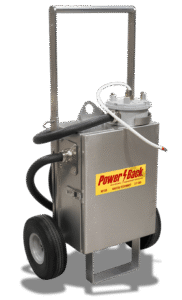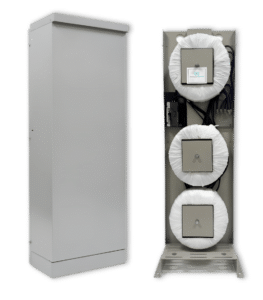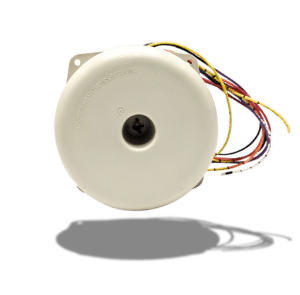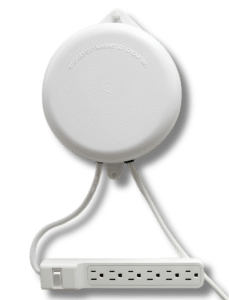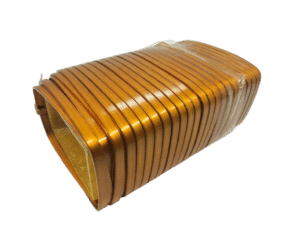
A temporary restoration autotransformer left on a live service needs two trip paths: overcurrent and winding temperature. A breaker alone does not see slow overheating from load, ambient heat, or solar export.
That is the minimum protection for a unit that may stay connected for hours or days. Dual trip protection is not an extra feature. It is the standard a parked restoration device should meet. PowerBack is built to that standard with a model-rated circuit breaker plus a 105 C transformer shunt trip.
The Rule
| Layer | What it must do | Why it is required |
|---|---|---|
| Overcurrent breaker | Open on high current | Covers shorts and severe overload |
| Winding temperature trip | Open the breaker when the transformer is too hot | Covers slow heat while current still looks legal |
| Voltage and current checks | Confirm the restored service before leaving | Prevents leaving a wrong or overloaded connection online |
Ask every vendor the same question: Does winding temperature trip the breaker, or is there only an overcurrent device? If the answer is only a breaker, the unit does not meet dual trip protection.
Why a Breaker Alone Is Not Enough
A circuit breaker opens when current is high enough, fast enough, to look like a fault or a severe overload.
An autotransformer can still get too hot when current stays under the breaker rating. That happens when:
- The house, pedestal, or cabinet load stays high for a long time
- Ambient temperature is high
- The unit is undersized for the combined load
- Airflow around the enclosure is blocked
- Rooftop solar is exporting through the restored service
- The unit stays connected longer than a short emergency set
Winding temperature and line current are not the same measurement. One protection path cannot substitute for the other. That is why dual trip protection is necessary, not optional.

How Dual Trip Protection Works
Path 1: Circuit breaker (overcurrent)
The breaker is sized to the service class and opens on high current. That is the fast path.
Path 2: Transformer temperature shunt trip
A temperature sensor sits at the autotransformer, not only on the enclosure wall. When winding temperature reaches the trip point, the sensor shunt-trips the breaker even if current has not hit the magnetic trip point. That is the slow-heat path.
PowerBack implements path 2 at 105 C, with redundant 2x overcurrent trip on the breaker path, plus voltage and current monitoring on the 15kVA through 30kVA wheeled units.
| Model | Typical service | Breaker |
|---|---|---|
| PowerBack Lite 15kVA | 150A | 125A |
| PowerBack Lite / PB 20kVA | 200A | 160A |
| PowerBack 30kVA | 320A | 250A |
| PowerBack 50kVA | 400A multi-home | 400A |
How the Two Paths Work Together
| Condition | What the breaker sees | What the thermal trip sees | Result |
|---|---|---|---|
| Short or severe overcurrent | High amps | May still be cool | Breaker opens |
| Long high load, current under trip rating | Current looks legal | Winding climbs toward 105 C | Shunt trip opens the breaker |
| Blocked ventilation or hot day | Current may look normal | Temperature rises faster | Shunt trip opens the breaker |
| Solar export plus house load | Current may still look legal | Extra heating in the windings | Shunt trip opens if the winding hits 105 C |
| Normal restoration load | Current in range | Temperature in range | Unit stays online |
Why Temperature Must Be Measured at the Transformer
Enclosure air temperature lags the winding. A sensor on the box can still read acceptable while the core and copper are already hot. The thermal trip has to follow the winding. PowerBack puts the sensor at the transformer for that reason.
105 C is a hard stop, not a target. If a unit trips on temperature, the next questions are load, sizing, solar export, and whether the site needs a larger unit.
Solar, Export Current, and Extra Heating
A restoration device puts voltage back at the service. That is the job. It is also why a rooftop solar system may not behave like it does in a total outage.
On a dead service, most grid-tied inverters anti-island and shut off. On a restored service, the meter can show normal 120/240V again. The inverter may stay online or reconnect after its timed delay. If it exports, power is no longer only flowing into the house.
An autotransformer does not block reverse power. Export current can run back through the restoration path and add to house load on the remaining good conductor. The breaker may still see a legal number. The winding can still climb in temperature.
Inverter harmonics, and in some systems a small DC component, add winding and core loss. That extra loss shows up as heat over hours. Dual trip protection exists for that heat.
This does not mean every solar house will overheat a correctly sized unit. It means export is extra load that has to be counted.
| Source of extra heat | What happens | What dual trip does |
|---|---|---|
| House load only | Normal restoration current | Both paths stand by |
| House load plus solar export | Current through the unit can be load plus export | Thermal path can open at 105 C |
| Inverter harmonics | Extra eddy and winding loss | Temperature rise is slower, still visible to the sensor |
| Inverter reconnect or main-breaker close | Short inrush or step change | Breaker covers a high-current event; heat is covered if it continues |
Field rule on a house with solar: check whether the inverter is producing after restoration. If it is exporting, treat that as extra load on the unit and on the remaining good conductor. Size up if needed. Do not assume the inverter is off just because one utility conductor is still open.
Grid Steps and Transients
Closing the customer main, an inverter coming back online, or a sudden load step can push a short burst of current through the unit. Dual trip protection is not a lightning arrester and not a TVSS. It is protection against sustained overcurrent and winding temperature after those events.
If a unit trips on a solar home, do not reset and leave. Confirm voltage, current, whether the array is exporting, and whether the kVA rating still matches the combined load.
Monitoring Before You Leave the Site
Dual trip is the automatic layer. Monitoring is the human layer.
Confirm:
- 240V across the restored legs where expected
- 120V from each hot to neutral
- Current in a range that matches the service and the unit rating
Do not leave a unit online because the breaker stayed closed. Leave it online because voltage is correct and current is believable for that house, pedestal, or cabinet.
Optional GFI: A Third Layer, Not a Substitute
Dual trip protection covers overcurrent and overtemperature. It does not replace ground-fault protection.
The PowerBack GFI add-on watches for a ground-fault / imbalance condition and can trip the main breaker when that condition is present. Published GFI behavior includes:
- Monitoring of the conductors against neutral balance
- A trip on an 8 amp imbalance
- A defeat / test sequence so the installer restores first, then enables GFI
- Compatibility across PowerBack models
GFI stays off during the initial hot-leg or neutral restoration setup. Test first, confirm voltage, then activate. Enabling GFI too early can nuisance-trip the unit before the customer is back.
GFI does not stop solar export. Export is a heating and sizing issue. GFI is a leakage and imbalance issue.
Where GFI Is a Good Idea
| Site | Add GFI? | Why |
|---|---|---|
| Dry, short-term, single home, known good remaining conductors | Optional | Dual trip already covers heat and overcurrent |
| Wet yard, snow, flood, irrigation | Yes | Ground-fault risk is higher |
| Occupied home with kids, pets, or outdoor equipment | Yes | More exposure around the meter and yard |
| House with solar, unit staying on for days | Strongly consider | Longer dwell plus more equipment on the service |
| Multi-home pedestal or multi-meter cabinet | Strongly consider | One landing point feeds several customers |
| Known damaged insulation or uncertain isolation of the faulted conductor | Yes | Leakage paths are more likely |
GFI is not a substitute for isolating the faulted conductor. It is an extra trip path if current leaves the intended circuit after the unit is already online.
Do not use GFI to paper over a wrong size. If load, or load plus solar export, is too large, use a larger unit. Dual trip will still see heat. GFI will not add capacity.
How to Spec Dual Trip Protection
Write the spec as a requirement, then name the product that meets it:
- Required: Dual trip protection (overcurrent breaker plus transformer winding temperature trip)
- Required: Voltage and current verification before leaving the site
- Recommended: GFI for wet sites, long dwell time, multi-customer landings, occupied residences, and solar homes that will stay restored for days
- Optional: GPS if the fleet needs to know which unit is still at which address
If winding temperature does not trip the breaker, the spec is not met.
Field Rule
If the breaker trips, treat it as overcurrent, a load problem, or a reconnect spike.
If the unit trips and the load did not look high, treat it as heat, solar export, or a ground-fault if GFI is on.
Do not reset and walk away without checking voltage, current, inverter status, and whether the unit is the right kVA.
FAQ
Is dual trip protection optional on a temporary restoration device?
No. It is the minimum for a unit that may stay connected for hours or days. A breaker alone does not see slow overheating.
What is dual trip protection?
Two independent trip paths: an overcurrent circuit breaker and a transformer temperature sensor that opens the breaker when the winding is too hot.
Why isn’t a breaker enough?
A breaker opens on high current. An autotransformer can overheat while current is still below the breaker rating. Solar export and long dwell time make that more likely.
Does winding temperature need to trip the breaker?
Yes. If the sensor only alarms, or if there is no winding sensor, that is not dual trip protection.
How does PowerBack meet the standard?
PowerBack uses a model-rated circuit breaker plus a 105 C transformer shunt trip, with voltage and current monitoring on the wheeled 15–30kVA units.
Can rooftop solar overheat a restoration autotransformer?
It can add heat if the inverter stays online and exports through the restored service. Dual trip protection is there for that extra heating. It is not guaranteed on every solar house.
Does dual trip stop grid transients?
It opens on high current or winding overtemperature. It does not replace surge protection.
What does the GFI option do?
It adds ground-fault / imbalance protection, including a published 8 amp imbalance trip on PowerBack, after the unit is already online.
Does GFI replace dual trip or handle solar export?
No. GFI is a third layer for ground faults. Dual trip remains the overcurrent and overtemperature requirement. Export is a sizing and heating issue.
Product Callout
Bridgeport Magnetics PowerBack
Temporary power restoration devices built with dual trip protection: model-rated circuit breaker plus 105 C transformer shunt trip, voltage and current monitoring, and optional GFI.
Phone: (203) 954-0050
Email: [email protected]
bridgeportmagnetics.com/powerback