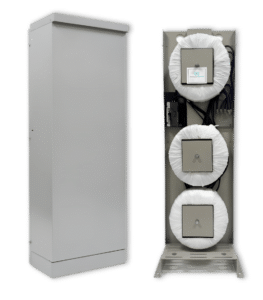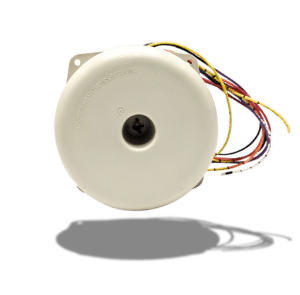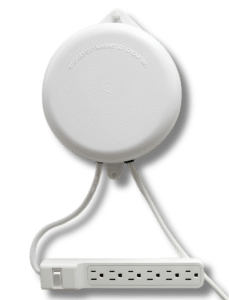
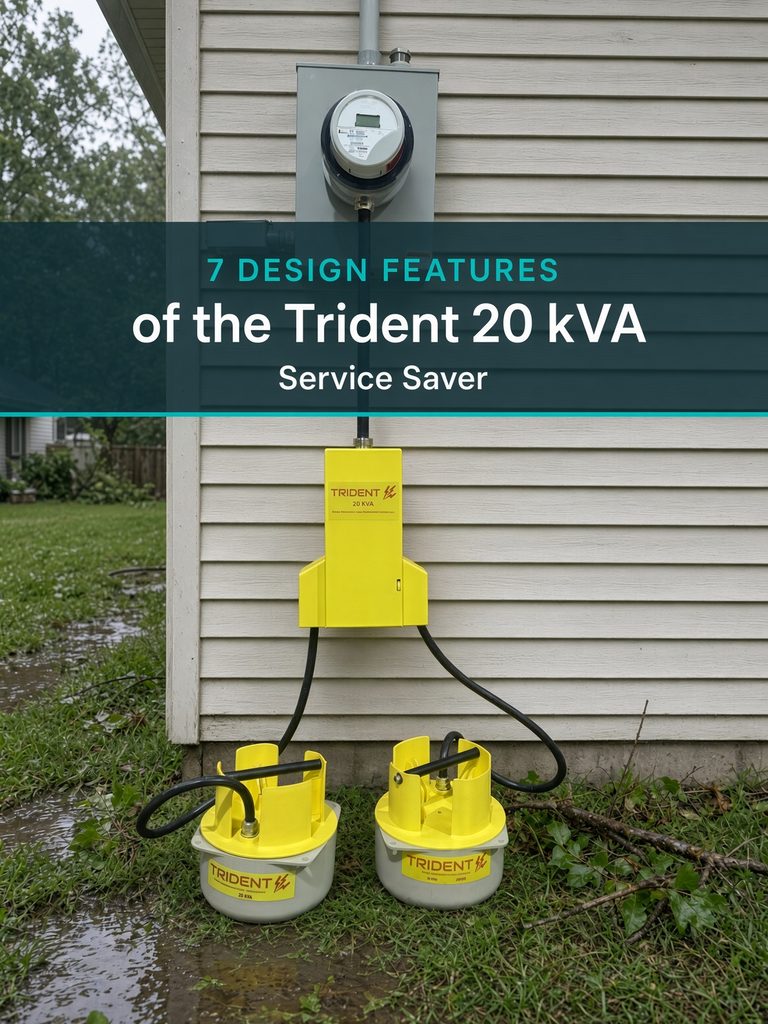
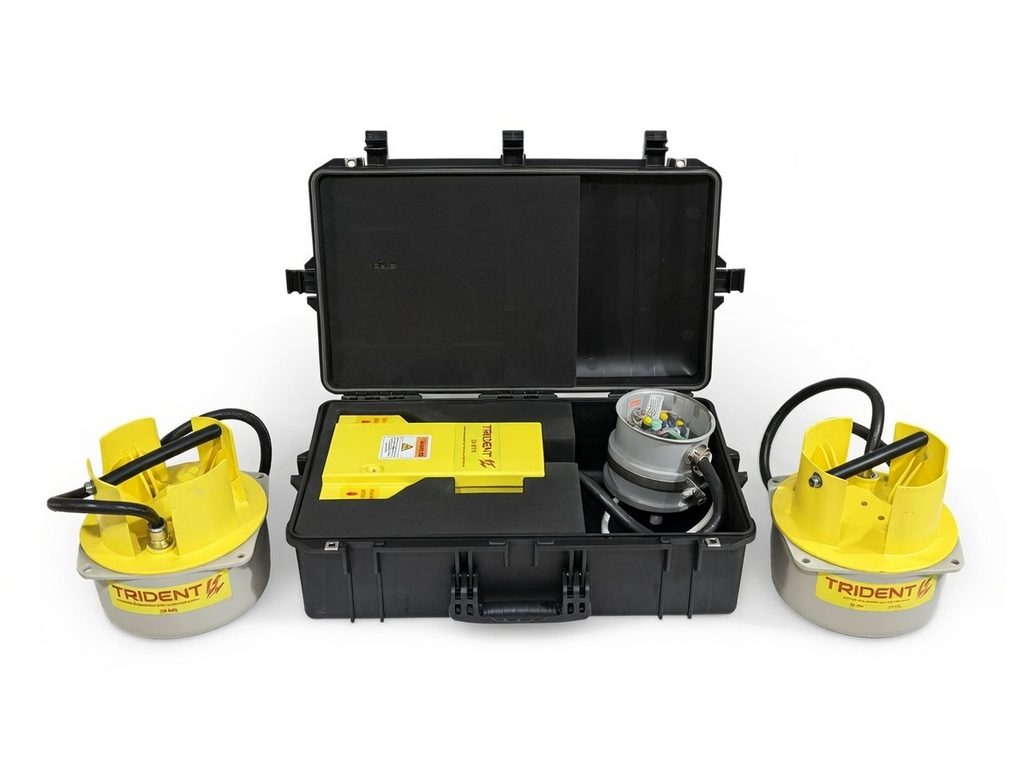
A Trident 20 kVA service saver is a modular temporary power restoration autotransformer. Each 10 kVA module weighs about 45 lb, sits in a hermetically sealed flame-rated ABS casing, and has its own 50A breaker. Two modules make 20 kVA for a 200A-class residential ticket. The control unit rides in a weatherproof case. The adapter is a single-turn meter head.
That is the product. The rest of this page is why each of those choices exists.
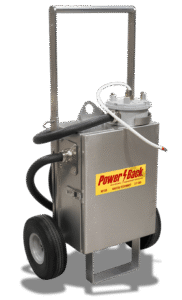
Utilities also call this class a service saver, add-a-phase, or restore-a-phase unit. Trident is the one-man version. Wheeled PowerBack carts cover 15 kVA to 50 kVA when the job is a pedestal, a pad-mount, or a multi-meter cabinet. Trident is for the backyard, the easement, and the flooded yard a cart cannot enter.
What the 7 features solve
| Field problem | Trident design |
|---|---|
| Troubleman weight limit | About 45 lb per 10 kVA module |
| One house vs a heavier 200A ticket | Modular 2 x 10 kVA = 20 kVA |
| One auto overloaded | Independent 50A breaker on each module |
| Slow hookup at the socket | Single-turn meter adapter |
| Weeks on a live meter in weather | Hermetic winding in flame-rated ABS |
| Water at the cap/base joint | Chemical weld, cap to base |
| Control gear left in the grass | Weatherproof control case |
Feature 1. About 45 lb per 10 kVA module
A first responder does not bring a three-person crew to every missing-leg call. Many utilities run a troubleman or a one-man lift with a hard weight cap near 50 lb. If the restoration transformer is heavier than that, it stays on the truck. The house stays dark until a cart and a second body arrive.
Trident puts each 10 kVA autotransformer at about 45 lb, plus a control unit of about 9 lb. That is the difference between walking the unit to the meter and waiting on a wheeled cart.
| Piece | Approximate weight | What it is |
|---|---|---|
| One 10 kVA module | 45 lb | Sealed autotransformer |
| Control unit | 9 lb | Breakers, metering, connections |
| Two-module 20 kVA kit | Two 45 lb modules + control | Full Trident 20 kVA service saver |
45 lb is one module, not the whole kit. Say that on every graphic. The one-man story is the module a single lineman can carry through a gate.
Weight is not a comfort spec. It is whether the unit gets used. A service saver that sits in the bay does not restore 120/240V. Hours on a meter only accumulate when the first person on scene can deploy it.
Feature 2. Modular 2 x 10 kVA = 20 kVA
Not every ticket needs 20 kVA. Some houses are a 100A-class restore. Some are a 200A-class restore. A single boxed 20 kVA transformer forces the crew to carry the whole rating every time.
Trident splits the rating.
| Configuration | kVA | Typical service | What you carry |
|---|---|---|---|
| One module | 10 kVA | About 100A | One 45 lb auto + control |
| Two modules | 20 kVA | About 200A | Two 45 lb autos + control |
Recommended service on the published lineup is 100A with one auto and 200A with two autos. That is how a modular Trident 20 kVA service saver covers both tickets without making every call a two-module carry.
If only one module is installed and the house tries to pull more than that module should carry, that module’s 50A breaker opens. The design assumes you match module count to the service. Do not treat one 10 kVA puck as a 200A restore.
Wheeled 30 kVA and 50 kVA PowerBack units still own multi-home pedestals and cabinets. Trident is not that product. Modular 20 kVA is the top of the handheld range.
Feature 3. Independent 50A breaker on each auto
This is the protection story that belongs to Trident. It is not the same as PowerBack dual trip (breaker plus 105°C winding shunt). On Trident, each 10 kVA autotransformer has its own 50A breaker.
That matters when two modules are in the kit.
| Event | What the breakers do |
|---|---|
| One module sees overcurrent | That 50A breaker opens. The other module is not forced to cover a fault it was not carrying |
| Both modules see overcurrent | Each breaker can open on its own curve |
| Only one module is installed | The single 50A breaker is the overcurrent path for that auto |
Independent is the correct word. Redundant is not. Redundant would mean two devices watching the same current path. Trident gives each winding its own overcurrent device so a 20 kVA pair can be shut down one auto at a time.
The crew can also open a breaker on purpose. Selective shutoff is how you isolate a module without guessing which lead to pull in the rain.
Voltage and current indication on the control path is how the troubleman confirms the restore before leaving the yard. The breaker is the trip. The meters are the check.
Feature 4. Single-turn meter adapter
Temporary restoration only works if landing at the socket is fast and repeatable. Older methods were temporary overhead across the yard, a neighbor jumper, or a long lead dress that invited a mistake.
Trident uses a single-turn meter adapter on the published 200A adapter rating. The adapter is the interface to ring-type and ringless sockets when the matching head is selected (AM, AG, and CL320 on lever-bypass when the utility requires it). The point of single-turn design is fewer motions at an energized pan.
| Landing choice | When it is the right tool |
|---|---|
| Single-turn meter adapter | Single residential meter, 100A or 200A class |
| Two modules at that adapter | 20 kVA / 200A-class ticket |
| Cam-Lok / cabinet leads | Not Trident’s job. That is 50 kVA PowerBack at a pedestal or multi-meter cabinet |
A clean adapter landing is also a safety feature. Less time at the socket. Less improvisation. Less chance the restore depends on a temporary overhead the homeowner’s kids can reach.
Feature 5. Hermetically sealed winding in flame-rated ABS
A service saver lives outside. Rain, snowmelt, irrigation, standing water at the meter, UV, and impact are the duty, not the exception.
Each Trident autotransformer is hermetically sealed in high-strength flame-rated ABS. The enclosure is non-metallic. Grounding is not required on the Trident modules. There is no steel can to rust in a wet yard.
Hermetic sealing means the winding is not an open stack sitting in damp air. Moisture, dust, and contamination stay off the coil. Flame-rated ABS means the housing itself is specified as fire-resistant polymer, not a painted box that peels.
| Housing choice | What you get | What you give up |
|---|---|---|
| Flame-rated ABS, hermetic | No rust, sealed winding, no module ground required | Not a NEMA 4 stainless cart |
| Stainless wheeled cart | Cart duty, larger kVA | Weight. Not a one-man carry |
Trident’s enclosure choice follows the weight choice. A 45 lb module cannot also be a 29 inch stainless cabinet. The polymer casing is how the unit stays both light and outdoor-rated.
Feature 6. Chemical weld, cap to base
Hermetic potting still leaves a joint: cap and base. That joint is where water tries to enter after years of temperature cycles and handling.
As of 6/20, Trident autotransformers receive chemical welding between the cap and the base. The two parts of the autotransformer casing are sealed so water has no path in. That weld is on the module housing only. It is not a claim about every accessory in the kit.
What the weld is protecting: the internal transformer windings, against moisture, chemicals, dust, vibration, and corrosion in utility and storm conditions.
| Seal layer | Where it sits | Job |
|---|---|---|
| Hermetic potting | Inside the ABS | Closes the winding |
| Chemical weld | Cap to base | Closes the two-part casing |
| Flame-rated ABS | Outer module | Impact, UV, fire rating |
IP66 testing has been filed with UL after these seal and potting updates. It is pending. Do not write IP66 as a completed listing on this page.
Feature 7. Weatherproof control case
The transformers can be sealed and the control path can still take on weather if the case is an open tote.
As of 7/1, the weatherproof case is standard on Trident. The older case remains available at a reduced cost. The control unit is what holds the connections the troubleman handles every ticket. It is also what sits in the grass for days while the cable crew is scheduled.
A custom weatherproof case is how the Trident 20 kVA service saver stays a complete outdoor tool. Sealed modules plus an open box is only half a design.
| Date | What changed |
|---|---|
| 6/20 | Chemical weld on autotransformer cap and base |
| 7/1 | Weatherproof control case becomes standard |
Those two dates are the current production standard. A high-hour unit from an earlier build may still be in fleet rotation. Inspect the case and the module joint when a unit comes in for service.
How the 7 features work on a real ticket
A missing hot or an open neutral at a single house. Cart cannot get through the gate. Troubleman is first on scene.
- Carry one or two 45 lb modules plus the control case.
- Land the single-turn adapter at the meter.
- Use one module or two to match 10 kVA or 20 kVA.
- Confirm voltage and current.
- Leave the sealed modules and weatherproof case in the yard.
- If a module overloads, its 50A breaker opens.
- Permanent cable work happens on the planned calendar.
That sequence is why the features exist together. Drop any one of them and the ticket gets slower, wetter, or heavier.
How this differs from a wheeled PowerBack
| Trident 20 kVA service saver | Wheeled PowerBack | |
|---|---|---|
| Rating | 10 kVA or 20 kVA | 15 kVA to 50 kVA |
| Carry | One person, about 45 lb per module | Wheeled stainless or resin cart |
| Protection highlight | Independent 50A breaker per auto | Breaker plus 105°C winding shunt on cart models |
| Landing | Single-turn meter adapter | Adapter on smaller carts; Cam-Lok on 50 kVA |
| Grounding | No grounding required on modules | Grounding on stainless cart models |
| Job | Backyard, easement, flood, one house | Pedestal, pad-mount, multi-meter, 400A class |
Use both in a fleet. Do not ask Trident to restore a multi-home pedestal. Do not ask a 50 kVA cart to go where a troubleman can only carry 45 lb.
Field hours
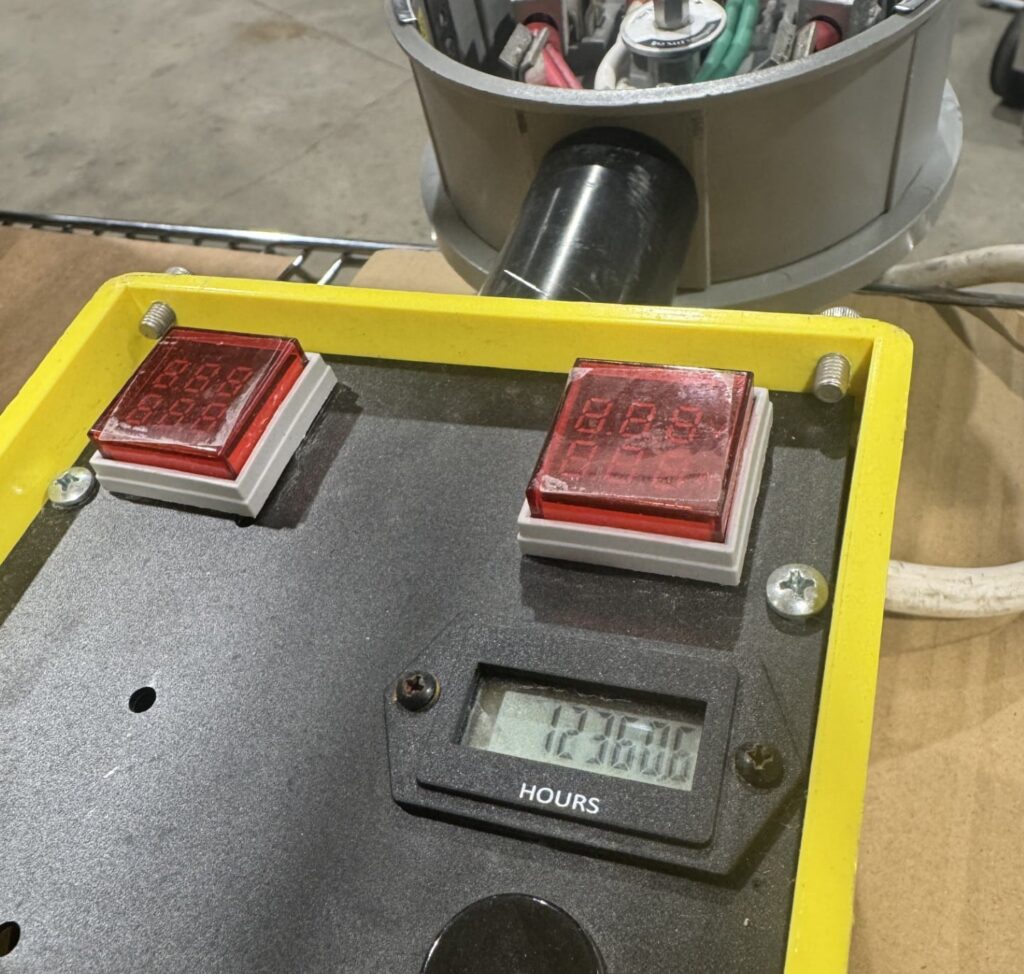
A Trident in fleet service recorded 12,360 connected hours, came in for routine service in good condition, and went back out. That meter is dwell on live services, not a lab rating. The design features above are what make a number like that possible: weight so it gets deployed, sealing so it can sit, breakers so an overloaded module does not take a blind path.
FAQ
What is a Trident 20 kVA service saver?
A modular temporary power restoration autotransformer. Two 10 kVA modules make 20 kVA. Each module is about 45 lb and has its own 50A breaker.
Why 45 lb?
So one troubleman can carry a module under a typical one-man lift limit and restore 120/240V at the meter without waiting on a cart.
Do both modules always have to go out?
No. One module is a 10 kVA / about 100A ticket. Two modules are 20 kVA / about 200A.
Are the 50A breakers dual trip like PowerBack?
No. Trident uses an independent 50A breaker on each auto. PowerBack wheeled units add a 105°C winding shunt trip on those models.
What does hermetically sealed mean on Trident?
The autotransformer winding is sealed in flame-rated ABS. As of 6/20 the cap and base are chemically welded so water has no path into the module.
Is the weatherproof case required?
It is standard as of 7/1. The previous case is still offered at a reduced cost.
Is Trident IP66 listed?
UL IP66 testing has been filed. It is pending.
Does Trident need a ground rod?
Published Trident modules do not require grounding. Follow the utility procedure for the adapter and the service.
Where is the Trident 20 kVA service saver made?
Shelton, Connecticut, by Bridgeport Magnetics Group.
Product Callout
Bridgeport Magnetics Trident 20 kVA service saver
Modular one-man temporary power restoration. About 45 lb per 10 kVA module. Independent 50A breakers. Single-turn meter adapter. Hermetically sealed flame-rated ABS with cap-to-base chemical weld. Weatherproof control case. Made in the USA.
Phone: (203) 954-0050
Email: [email protected]
bridgeportmagnetics.com/powerback