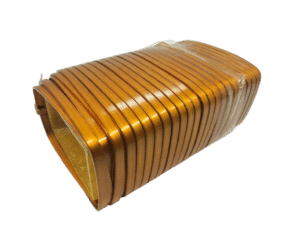
Every current transformer used for metering, protection, or monitoring depends on one critical manufacturing step: the coil winding. The precision with which wire is tensioned, layered, and positioned directly determines ratio accuracy, phase performance, leakage current, and long-term reliability.
In data centers, medical equipment, and utility metering systems, small variations in winding quality can lead to measurement errors, compliance failures, or unexpected downtime. Just as boat owners must choose the right level of protection when connecting to shore power, manufacturers must choose the right level of coil winding capability when producing transformers for these demanding markets.
Basic winding equipment can produce functional units for general applications. Precision coil winding equipment is what enables the tight tolerances, consistency, and performance required for data center power monitoring, medical isolation, and utility metering accuracy.
Why Winding Precision Creates or Prevents Performance Problems
Imprecise coil winding introduces several issues that become costly in critical applications:
- Ratio and Phase Errors – Variations in turns count or tension cause inaccurate current measurement. This leads to billing discrepancies in data centers and unreliable protection in utility systems.
- Elevated Leakage Current – Poor layering increases capacitance and leakage. This is unacceptable in medical isolation transformers and problematic in sensitive monitoring applications.
- Higher Losses and Heat – Inefficient windings increase operating temperatures and reduce efficiency, which is especially costly in high-density data center environments.
- Inconsistent Performance – Batch-to-batch variation makes it difficult to meet accuracy class requirements or pass regulatory testing.
Advanced coil winding equipment controls these variables at the source, delivering the repeatability and precision these markets demand.
Comparison: Standard vs Precision Coil Winding Equipment
| Feature | Standard / Basic Equipment | Precision / Advanced Equipment |
|---|---|---|
| Wire Tension Control | Manual or basic mechanical | Programmable servo with real-time feedback |
| Layering and Pitch Consistency | Operator dependent | CNC controlled for uniform results |
| Batch-to-Batch Repeatability | Moderate | Very high |
| Process Monitoring & Data Logging | Limited | Full traceability and parameter recording |
| Support for 0.2 / 0.5 Accuracy Class | Challenging | Well suited |
| Ability to Achieve Low Leakage Current | Difficult | Excellent (supports medical-grade requirements) |
| Efficiency and Thermal Performance | Basic | Optimized for low losses and compact designs |
| Suitability for Data Center Monitoring | Limited | Strong |
| Long-Term Cost of Quality | Higher scrap, rework, and warranty risk | Significantly lower |
Performance in Key Target Markets
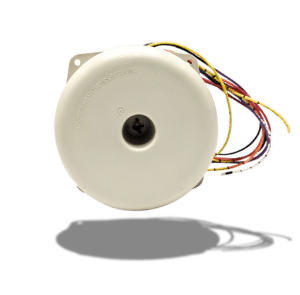
Data Center Power Monitoring and Efficiency Data centers require accurate, low-loss current transformers for branch circuit monitoring, energy metering, and power quality analysis in PDUs and UPS systems. Precision coil winding supports these needs by delivering low ratio and phase errors, reduced internal losses, and compact toroidal designs that fit space-constrained installations. This helps operators improve PUE tracking and maintain the high reliability expected in mission-critical facilities.
Medical Isolation and Patient Safety Medical equipment must limit patient leakage current to very low levels (typically under 100 µA) per IEC 60601 standards. Precision winding, combined with proper layering and shielding, is essential for achieving the low leakage current and low EMI performance these applications require. Toroidal transformers produced on advanced equipment consistently meet the strict safety and repeatability demands of patient-connected devices.
Utility and Critical Power Metering Utilities and critical infrastructure rely on metering current transformers for accurate energy measurement, protection, and monitoring. Winding precision directly affects ratio accuracy, phase angle, and long-term stability under varying load conditions. High-quality coil winding equipment enables manufacturers to produce transformers that reliably meet accuracy class requirements while withstanding the demands of utility environments.
When to Invest in Advanced Coil Winding Equipment
Standard equipment may be adequate for low-volume or non-critical applications. However, manufacturers should consider precision coil winding equipment when:
- Targeting data center, medical, or utility metering markets
- Customers require documented accuracy class performance or low leakage current
- Repeatability across production batches is essential
- Reducing scrap, rework, and field failures is a priority
- Producing toroidal or compact designs for space-constrained applications
- Regulatory compliance and traceability are important
Key Capabilities That Deliver Results
Look for coil winding equipment with:
- Programmable servo tension control
- CNC layering and pitch positioning
- Real-time process monitoring with full data logging
- Multi-spindle capability for efficient production
- Flexibility for both toroidal and conventional core geometries
- Integration with quality systems for traceability
These features enable consistent, high-performance current transformers that meet the technical and regulatory demands of data center, medical, and utility applications.
Bridgeport Magnetics Group – Precision Manufacturing for Demanding Markets
Bridgeport Magnetics Group designs and manufactures custom toroidal and conventional current transformers for data center monitoring, medical isolation, and utility metering applications. Our investment in advanced coil winding technology allows us to maintain the tight process controls required for high accuracy, low leakage, and consistent performance.
All transformers are built in our Shelton, Connecticut facility with full traceability and a focus on quality and repeatability.
If you are developing or sourcing current transformers for data center, medical, or utility applications and want to understand how precision winding affects your specifications, contact our team.
Phone: (203) 954-0050
Email: [email protected]
Website: bridgeportmagnetics.com
Frequently Asked Questions
Why does coil winding precision matter more for data center, medical, and utility transformers than for general industrial use? These applications have stricter requirements for measurement accuracy, leakage current, efficiency, or regulatory compliance. Small winding variations that might be acceptable elsewhere can cause significant problems in these environments.
Can basic coil winding equipment produce transformers suitable for data centers or medical devices? It can produce functional units, but consistently meeting tight accuracy, low leakage, or repeatability requirements is much more difficult and less reliable without precision equipment.
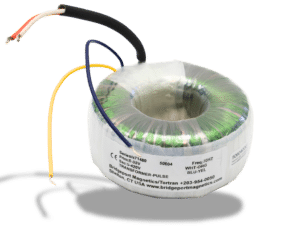
What advantages do toroidal current transformers offer when produced with advanced winding equipment? Toroidal designs provide lower losses, reduced EMI, and more compact size. Precision winding maximizes these benefits through uniform layering and consistent electrical characteristics.
How does Bridgeport Magnetics support customers in these markets? We combine advanced coil winding capability with extensive experience in custom toroidal transformer design. This enables us to deliver current transformers that meet the specific accuracy, leakage, and performance requirements of data center, medical, and utility applications.
Ready to improve the quality and consistency of your current transformers? Contact Bridgeport Magnetics Group today.