When stepping down from 480V to 120/208V in commercial and industrial applications, the choice between a 3 phase toroidal transformer and a conventional EI core transformer has a meaningful impact on size, operating temperature, energy consumption, and long-term costs.
While traditional three-phase EI core transformers remain widely used, 3 phase toroidal transformers, such as the PowerTower from Bridgeport Magnetics, have become increasingly preferred in applications where space, efficiency, and thermal performance matter. Understanding the technical reasons behind this shift helps engineers and facility managers make better equipment decisions.
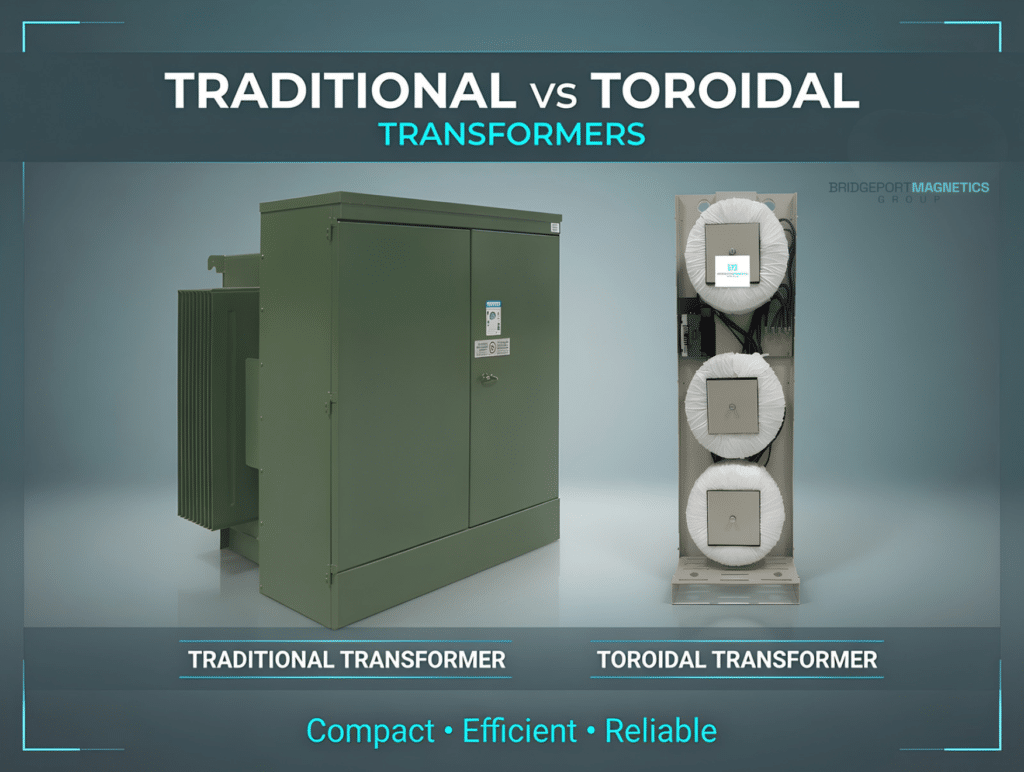
Quick Comparison at a Glance
| Factor | Conventional EI Core | 3 Phase Toroidal Transformer | Advantage |
|---|---|---|---|
| Core Losses | Higher | 30 to 50% lower | Toroidal |
| Physical Size | Larger footprint | Up to 50% smaller | Toroidal |
| Operating Temperature | Higher temperature rise | Cooler operation | Toroidal |
| Electromagnetic Interference | Higher stray fields | Significantly lower | Toroidal |
| Audible Noise | Noticeable hum | Very quiet | Toroidal |
| Efficiency | Good | 0.5 to 1.5% higher | Toroidal |
| Power Density | Lower | Higher | Toroidal |
Magnetic Path and Core Geometry
The most fundamental difference between toroidal and EI core transformers is the magnetic circuit.
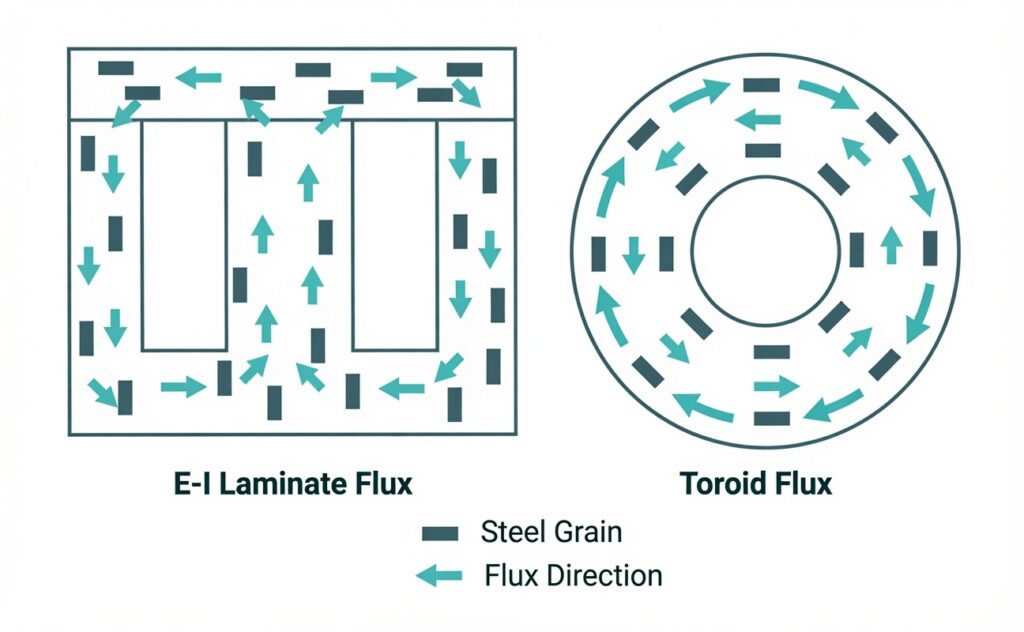
In a conventional EI core transformer, magnetic flux must travel through multiple right-angle turns and laminated joints. These corners and air gaps increase magnetic reluctance and create localized areas of higher flux leakage. This geometry contributes to higher core losses and higher magnetizing current.
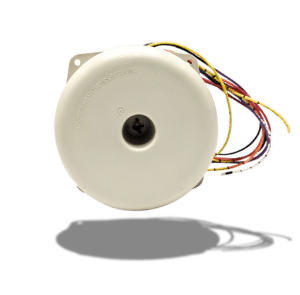
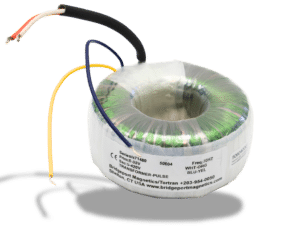
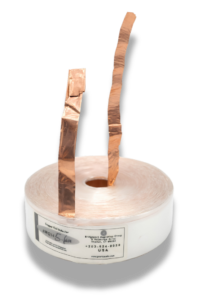
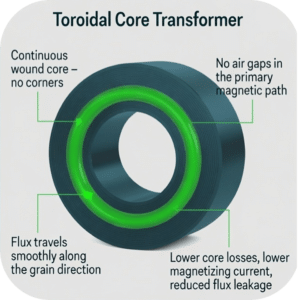
A 3 phase toroidal transformer uses a continuous, wound grain-oriented silicon steel core with no corners and no air gaps in the primary magnetic path. The flux travels smoothly along the grain direction of the steel. This results in lower core losses, lower magnetizing current, and reduced flux leakage compared to an equivalent EI core design.
In three-phase applications, these advantages apply across all three phases simultaneously, making the benefits more pronounced than in single-phase designs.
Core Losses and Thermal Performance
Core losses consist of hysteresis loss and eddy current loss. Both are influenced by flux density, frequency, material properties, and core geometry.
EI core transformers experience elevated losses due to corner effects and air gaps at the lamination joints. Even with high-grade silicon steel, the fundamental geometry imposes limitations.
Toroidal cores significantly reduce both types of losses because of the continuous magnetic path and better flux alignment with the grain orientation. In well-designed 3 phase toroidal transformers in the 75kVA to 350kVA range, core losses are typically 30% to 50% lower than comparable EI core units.
Lower core losses directly translate to less heat generation and lower operating temperatures, which is an important advantage in continuously loaded commercial and industrial installations.
Core Losses & Thermal Performance Summary
| Performance Metric | Typical Improvement with Toroidal | Impact on System |
|---|---|---|
| Core Losses | 30 to 50% lower | Less heat generated |
| Operating Temperature Rise | Noticeably lower | Improved reliability |
| Cooling Requirements | Often reduced | Smaller cooling systems possible |
| Long-term Energy Consumption | Lower | Reduced operating costs |
Physical Size and Power Density
One of the most practical advantages of 3 phase toroidal transformers is their higher power density.
Because the toroidal core makes more efficient use of magnetic material and eliminates wasted space from corners and joints in an EI core, a toroidal transformer can deliver the same power rating in a significantly smaller volume. In the 150kVA to 350kVA range commonly used for 480V to 120/208V step-down, toroidal designs frequently achieve 40% to 50% reductions in overall transformer volume compared to conventional EI core units.
This size advantage simplifies installation in space-constrained electrical rooms and can reduce structural requirements in buildings.
Efficiency and Operating Cost Implications
The combination of lower core losses and optimized winding design in toroidal transformers typically results in higher overall efficiency. In three-phase step-down applications, full-load efficiency improvements of 0.5% to 1.5% compared to similar EI core transformers are commonly observed.
While this percentage may appear modest, the financial impact becomes substantial in continuously loaded installations. Over a 15- to 20-year service life, the cumulative energy savings can represent a meaningful portion of the transformer’s total cost of ownership.
When 3 Phase Toroidal Transformers Offer the Greatest Advantage
| Application Condition | Level of Advantage | Recommendation |
|---|---|---|
| Continuous or high-duty-cycle operation | High | Strong case for toroidal |
| Space-constrained installations | High | Strong case for toroidal |
| High electricity costs | High | Strong case for toroidal |
| Sensitive electronic equipment nearby | High | Strong case for toroidal |
| Intermittent or lightly loaded operation | Moderate | EI core may be acceptable |
| Lowest initial cost is the main priority | Low | EI core often selected |
Inrush Current Consideration
One technical characteristic worth noting is inrush current. Toroidal transformers generally exhibit higher inrush current during energization compared to EI core transformers of similar rating. This occurs because of the low magnetizing current and absence of air gaps, which allows the core to saturate more readily during the first few cycles.
In most installations, this is manageable through proper circuit breaker selection and system design. It does not negate the operational advantages of toroidal designs but should be considered during engineering.
PowerTower as a Practical Example
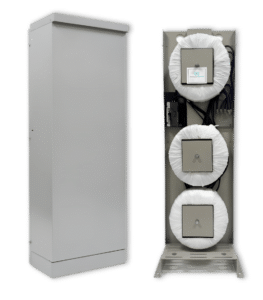
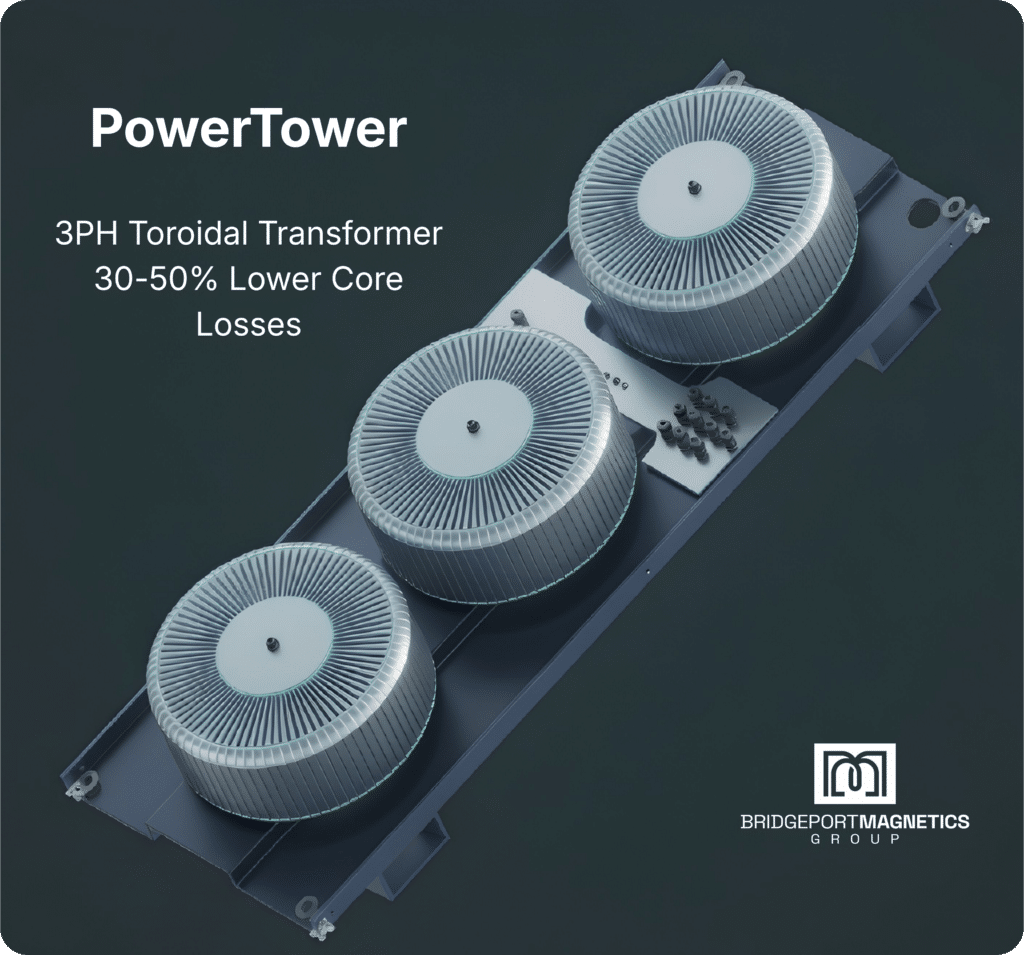
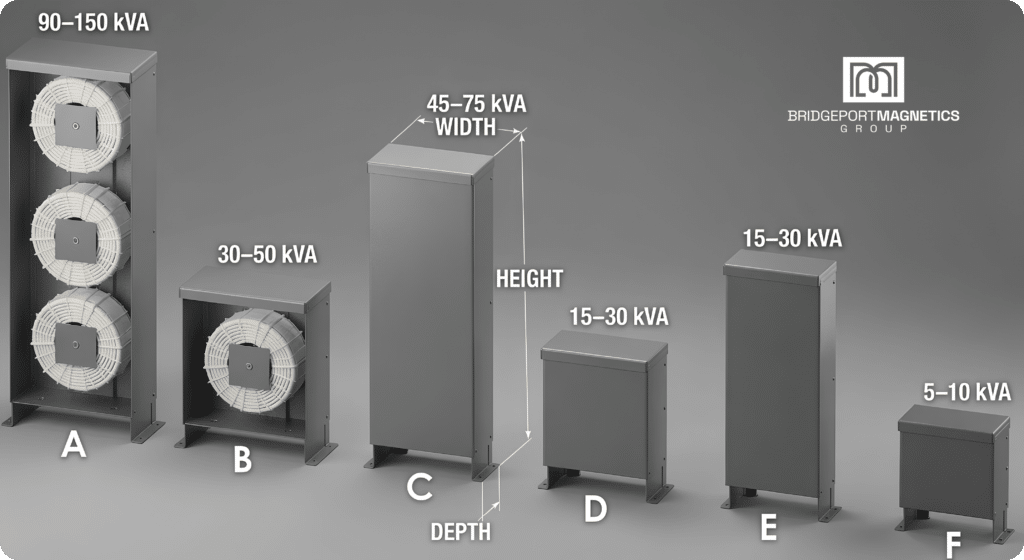
The PowerTower from Bridgeport Magnetics is a 3 phase toroidal transformer designed for 480V to 120/208V step-down applications up to 350kVA. It applies the advantages discussed above, including lower core losses, higher power density, and cooler operation, in a rugged package built for commercial and industrial environments.
Product Callout Bridgeport Magnetics PowerTower Series 3 phase toroidal transformers for 480V to 120/208V step-down applications up to 350kVA. Delivers higher power density, lower core losses, and cooler operation compared to conventional EI core designs. Built for commercial and industrial use where space and efficiency matter.
Request a quote or speak with our engineers
Key Technical Metrics Summary
| Metric | Typical Toroidal Improvement | Business Impact |
|---|---|---|
| Core Losses | 30 to 50% lower | Less heat and lower energy use |
| Physical Volume | 40 to 50% smaller | Easier installation and space savings |
| Full-Load Efficiency | +0.5% to +1.5% | Long-term energy cost reduction |
| Operating Temperature Rise | Noticeably lower | Improved reliability |
| Electromagnetic Interference (EMI) | Significantly lower | Better for sensitive equipment |
FAQ
Do 3 phase toroidal transformers always have lower core losses than EI core transformers? In most well-designed comparisons at equivalent power ratings, toroidal transformers exhibit lower core losses. The actual difference depends on material grade, core design, and operating conditions.
How significant are the energy savings in real installations? Energy savings are most noticeable in continuously loaded applications. Over 10 to 20 years, the cumulative savings can represent a meaningful portion of the transformer’s lifecycle cost.
Is higher inrush current a major drawback? Higher inrush current is a characteristic of toroidal designs, but it is generally manageable with proper protection coordination and does not outweigh the operational advantages in most applications.
When would you still choose a conventional EI core transformer? EI core transformers are often selected when lowest initial cost is the primary driver, when the unit will be lightly loaded, or when existing infrastructure favors a traditional form factor.
Does the PowerTower deliver the advantages discussed here? Yes. The PowerTower is engineered as a 3 phase toroidal transformer to provide the space, thermal, and efficiency benefits outlined in this post for 480V to 120/208V applications.