Every medical device that connects to a patient carries a hidden risk: electricity. While we often think of medical equipment as inherently safe, the truth is that any device plugged into facility power has the potential to allow small amounts of current to leak through insulation, ground paths, or capacitive coupling. In everyday environments this leakage usually goes unnoticed, but in medical settings, particularly when equipment contacts the body or is used during invasive procedures, even very small currents can cause serious harm.
This is why medical isolation transformers exist.
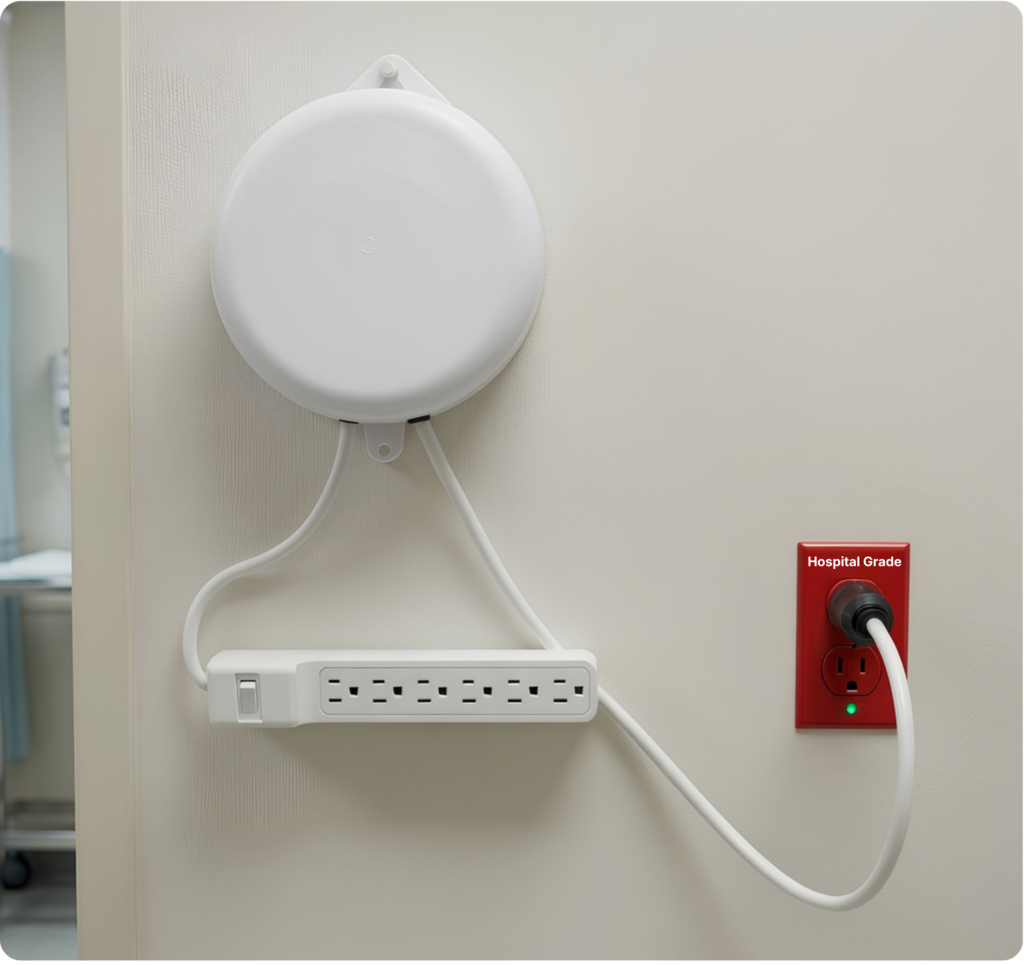
Hospitals, dental offices, OEM manufacturers, and biomedical teams rely on these transformers to reduce risk, improve equipment performance, and support regulatory compliance. Understanding what a medical isolation transformer actually does, and why it is fundamentally different from other transformers, is essential for anyone who specifies, purchases, or maintains medical electrical equipment.
A medical isolation transformer provides complete galvanic isolation between the incoming power supply and the medical device it powers. Unlike a standard power supply or a regular isolation transformer, it is specifically engineered to help equipment meet the strict safety requirements of IEC 60601-1, especially around leakage current and patient protection.

What Is a Medical Isolation Transformer?
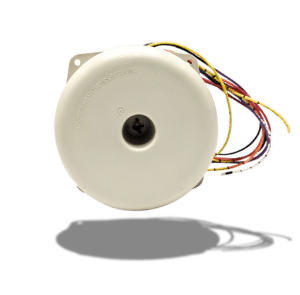
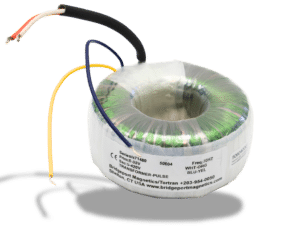
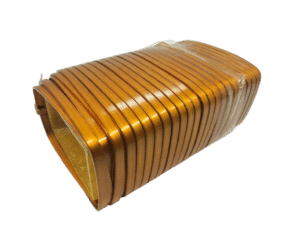
A medical isolation transformer is a specialized toroidal transformer designed to create electrical isolation between the power source and the medical equipment. It has a primary winding connected to facility power and a secondary winding connected to the medical device, with no direct electrical connection between the two.
Energy transfers through the magnetic field of the transformer core rather than through a conductive path. This design breaks the electrical connection that would otherwise allow leakage current to flow from the power source into the patient or the equipment chassis.
Medical isolation transformers are typically compact, enclosed units built for use in patient care areas. Quality models include electrostatic shielding, thermal protection, and are tested to support compliance with medical safety standards such as UL 60601-1 and IEC 60601-1.
Why Galvanic Isolation Matters for Patient Safety
When medical equipment is connected directly to facility power without isolation, there is always some level of electrical connection between the device and the building’s grounding system. This connection creates a pathway for leakage current to reach the patient through sensors, electrodes, handpieces, or even the equipment housing.
In normal commercial settings, small leakage currents rarely cause noticeable problems. However, medical environments are different:
- Patients may already be vulnerable due to their condition or medication.
- Some procedures involve direct contact with the heart or internal tissues.
- Patients are often connected to multiple pieces of equipment at the same time.
- Even currents measured in microamps can cause pain, muscle stimulation, or dangerous cardiac arrhythmias.
A medical isolation transformer removes this conductive path. By isolating the equipment electrically from the power source, it significantly reduces the amount of leakage current that can reach the patient under both normal and fault conditions.
Medical Isolation Transformer vs Standard Isolation Transformer
Many people assume that any isolation transformer will work for medical applications. This is a common and potentially dangerous misunderstanding.
Here is a clear comparison:
| Feature | Standard Isolation Transformer | Medical Isolation Transformer |
|---|---|---|
| Designed for patient-connected equipment | No | Yes |
| Leakage current performance | Variable and often higher | Engineered for very low leakage |
| IEC 60601-1 / UL 60601-1 support | Usually not certified | Tested and certified to medical standards |
| Electrostatic shielding | Sometimes present | Standard on quality medical models |
| Typical applications | Industrial, general electronics | Hospitals, dental offices, patient care equipment |
| Risk level in medical environments | Higher | Significantly lower |
| Common certifications | General electrical standards | UL 60601-1, IEC 60601-1 |
A medical isolation transformer is not simply a re-labeled standard transformer. It is purpose-built for safety in clinical environments where patient protection is the top priority.
How Medical Isolation Transformers Reduce Leakage Current
Leakage current in transformers primarily comes from capacitive coupling between the primary and secondary windings and between the windings and the core or enclosure. A well-designed medical isolation transformer minimizes this through several engineering approaches:
- Toroidal core construction, which creates a more continuous magnetic path and lower stray fields than traditional EI-core designs.
- Electrostatic shielding between primary and secondary windings to block high-frequency noise and reduce capacitive coupling.
- High-quality insulation materials and potted construction that further limit unintended current paths.
- Careful winding techniques that reduce the physical proximity between primary and secondary conductors.
These design choices help keep leakage current well below the limits defined in IEC 60601-1, even under single-fault conditions.
IEC 60601 Leakage Current Limits
The IEC 60601-1 standard sets maximum allowable patient leakage current based on the type of applied part and the operating condition of the equipment.
Here is a simplified overview of the key limits:
| Applied Part Type | Normal Condition | Single-Fault Condition | Risk Level |
|---|---|---|---|
| Type B (non-cardiac) | 100 µA | 500 µA | Moderate patient contact |
| Type BF (body floating) | 100 µA | 500 µA | Direct conductive contact |
| Type CF (cardiac floating) | 10 µA | 50 µA | Direct cardiac contact |
These limits are significantly stricter than those for general-purpose electrical equipment because of the potential consequences when current flows through a patient.

Common Applications by Transformer Size
Different medical applications require different power capacities. Here is a general guide to common use cases by VA rating:
| VA Rating | Typical Applications | Common Environments | Example IsoPuck Model |
|---|---|---|---|
| 200–400 VA | Dental chairs, small monitors, portable devices | Dental offices, clinics | IP300/60 |
| 500–900 VA | Delivery systems, sterilization equipment, mid-size monitors | Dental + smaller hospitals | IP600/60, IP900/60 |
| 1000–1800 VA | Multi-device setups, larger diagnostic equipment | Hospitals, surgical centers | IP1200/60, IP1500/60, IP1800/60 |
| 2000+ VA | High-power equipment, multiple devices | Larger hospital departments | Higher capacity models |
This table shows why choosing the right size matters, both for performance and for meeting safety requirements.
When Medical Isolation Transformers Are Recommended
While not every medical device needs an external isolation transformer, they become highly valuable in these situations:
- Equipment with direct or conductive patient contact, especially Type BF or Type CF applied parts
- Devices used during cardiac procedures or near the heart
- OEM medical products that need help meeting leakage current requirements during certification testing
- Dental chairs, delivery systems, and sterilization units
- Patient monitoring and diagnostic equipment where low noise and high safety are priorities
- Installations in older facilities where grounding quality may be inconsistent
In many of these cases, adding a properly sized medical isolation transformer provides a reliable and practical solution.
Popular IsoPuck Models and Their Applications
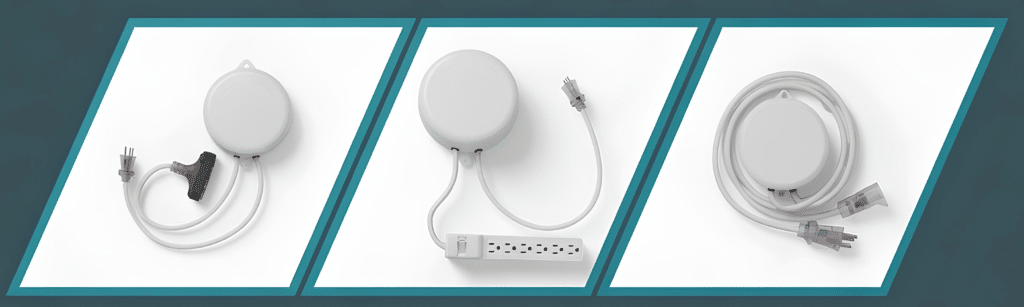
Bridgeport Magnetics manufactures a range of compact toroidal medical isolation transformers under the IsoPuck brand. Two models that are frequently used across dental and hospital settings are the IP300/60 and the IP1500/60.
The IP300/60 is a 300VA medical isolation transformer designed for 120V operation. It is well-suited for compact applications such as dental chairs, portable diagnostic equipment, and smaller patient monitoring systems where space is limited but low leakage current performance is still required.
The IP1500/60 is a 1500VA medical isolation transformer also designed for 120V systems, with 230V configurations available on request. It offers higher capacity for equipment with greater power demands, such as multi-device setups or larger hospital systems, while maintaining strong leakage current performance and IEC 60601-1 compliance support.
Both models feature electrostatic shielding and are built to help medical equipment meet strict safety standards.
Product Callout Bridgeport Magnetics IsoPuck Series Compact toroidal medical isolation transformers from 200 VA to 3000 VA, including the IP300/60 (300VA) and IP1500/60 (1500VA) models. Designed for 120V operation, with 230V configurations available. These models include electrostatic shielding to help achieve low leakage current and are commonly used in dental offices and hospital applications where IEC 60601-1 compliance is required. UL 60601-1 and IEC 60601-1 compliant. Custom voltage, lead, and configuration options available.
Request a quote or speak with our engineers
FAQ
What is the difference between a medical isolation transformer and a regular isolation transformer? A medical isolation transformer is specifically designed and tested to meet the leakage current and safety requirements of IEC 60601-1 for use with patient-connected equipment. A standard isolation transformer is not built to these medical standards.
Do all medical devices need an isolation transformer? No. Many devices have adequate isolation built into their internal power supplies. However, devices with direct patient contact, high leakage risk, or those struggling to meet compliance often benefit significantly from an external medical isolation transformer.
How does a toroidal design help with leakage current? Toroidal transformers generally produce lower stray magnetic fields and reduced capacitive coupling compared to traditional EI-core transformers. Adding electrostatic shielding between windings further improves leakage performance.
Can one medical isolation transformer support multiple devices? It depends on the total load and the specific application. In some cases a higher-capacity unit such as the IP1500/60 can support multiple devices, but each situation should be evaluated based on power requirements and safety classification.
Are Bridgeport IsoPuck transformers certified to IEC 60601-1? Yes. The IsoPuck series is designed and tested to support compliance with UL 60601-1 and IEC 60601-1 standards.