A SCIF isolation transformer is becoming one of the most important power components in modern Sensitive Compartmented Information Facility design. As ICD 705 technical requirements and TEMPEST guidance continue to raise expectations for true electrical isolation, facility designers, MEP engineers, and security stakeholders are looking more closely at how power enters and moves inside a SCIF. Conducted emissions, ground loops, and common-mode noise are no longer secondary concerns. They are central to accreditation risk.
This post explains why power isolation matters under current SCIF standards, what an isolation transformer actually contributes, and how properly designed toroidal units with electrostatic shielding support cleaner, more controllable power in both permanent and modular SCIFs.

Why Power Isolation Matters in a SCIF
SCIFs exist to protect Sensitive Compartmented Information. Physical construction, acoustic performance, access control, and intrusion detection receive most of the attention. Power distribution is often treated as a supporting system. That approach is becoming harder to defend.
Electronic equipment processing classified information produces electromagnetic energy. Some of that energy can couple onto power conductors. If those conductors leave the inspectable space without adequate isolation or filtering, they can carry compromising signals. TEMPEST guidance and the Certified TEMPEST Technical Authority (CTTA) process exist specifically to evaluate and mitigate these risks.
ICD 705 and its implementing technical specifications emphasize controlled penetrations, careful utility routing, and countermeasures when recommended by the CTTA. Electrical utilities are expected to enter the SCIF at controlled points. Metallic penetrations may require dielectric breaks, filtering, or grounding strategies. In practice, this creates demand for power architectures that limit conducted paths between the outside world and the equipment inside the SCIF.
An isolation transformer addresses one of the most fundamental of those paths: the direct electrical connection between the upstream power source and the downstream load.
What a SCIF Isolation Transformer Does
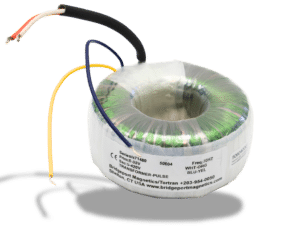
A SCIF isolation transformer provides galvanic isolation between its primary and secondary windings. There is no direct conductive path for current to flow from the input side to the output side. Power is transferred magnetically. This breaks ground loops, reduces common-mode noise, and limits the ability of signals on one side of the transformer to appear on the other.
When the transformer also includes a Faraday (electrostatic) shield between the windings, capacitive coupling is further reduced. The shield intercepts electric-field coupling that would otherwise allow high-frequency noise to pass between primary and secondary. The result is cleaner separation than a basic isolation transformer without shielding.
In SCIF applications, these characteristics support several goals:
- Reduction of conducted emissions leaving the facility on power lines
- Improved control of common-mode noise that can affect sensitive electronics
- Support for RED/BLACK separation concepts when power domains need to be kept distinct
- A practical, passive method of isolation that does not rely solely on active filtering
Isolation transformers do not replace the full set of TEMPEST countermeasures that a CTTA may require. They are one proven element within a broader isolation and filtering strategy.
ICD 705, TEMPEST, and the Direction of Requirements
ICD 705 establishes the policy framework for SCIFs across the Intelligence Community. The associated technical specifications provide the detailed construction and management guidance used by designers and accrediting officials. While the documents address many topics beyond power, several themes are consistent:
- Penetrations of the SCIF perimeter must be minimized and controlled
- Utilities serving other areas should not transit the SCIF without mitigation
- Electrical service should enter at defined points
- TEMPEST countermeasures are applied based on CTTA assessment
- RF and conducted paths are treated as real risk vectors
As facilities process more electronic information and as modular and containerized SCIFs proliferate, the pressure on power isolation increases. Designers are being asked to demonstrate cleaner separation, not simply assume that standard commercial power distribution is adequate. The LinkedIn discussion around rising requirements and the need for “real isolation” reflects this shift. By the later 2020s, facilities that cannot show effective power isolation will face greater scrutiny during accreditation.
Why Toroidal Isolation Transformers Are Well Suited to SCIF Work
Not all isolation transformers perform equally in the environments typical of modern SCIFs. Conventional EI-core designs can produce higher external magnetic fields and often require more volume for a given power rating. In a modular or containerized SCIF, space is limited and external fields can interfere with nearby sensitive equipment or complicate shielding strategies.
Toroidal isolation transformers offer several practical advantages:
| Characteristic | Toroidal Advantage | SCIF Relevance |
|---|---|---|
| Stray magnetic field | Significantly lower than conventional EI designs | Cleaner environment for nearby electronics |
| Size and weight | More compact for a given kVA rating | Better fit in modular and containerized SCIFs |
| Efficiency | Higher, with lower losses | Reduced heat load in confined spaces |
| Electrostatic shielding | Readily incorporated as a Faraday shield | Improved rejection of capacitive noise |
| Customization | Easier to tailor voltage, shielding, and mounting | Supports project-specific ICD 705 requirements |
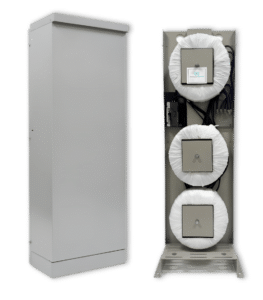
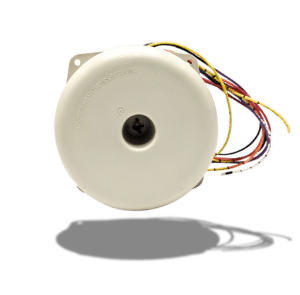
Bridgeport Magnetics designs custom toroidal isolation transformers that combine galvanic isolation with Faraday shielding. These units are engineered to deliver the low external field performance and compact form factor that modular SCIF projects need, while remaining fully Made in the USA.
Key Technical Features Designers Should Evaluate
When specifying a SCIF isolation transformer, several parameters deserve close attention:
Galvanic Isolation Confirm that the transformer provides true separation between primary and secondary with no shared conductive path. This is the foundation of ground-loop control and common-mode rejection.
Faraday / Electrostatic Shielding A properly terminated electrostatic shield between windings reduces capacitive coupling. This is especially valuable for attenuating higher-frequency noise that can ride on power conductors.
Low External EMI / Stray Fields In dense equipment layouts typical of modular SCIFs, lower stray magnetic fields reduce the need for additional local shielding and help keep the electromagnetic environment more predictable.
Efficiency and Thermal Performance Lower losses mean less heat rejection inside the SCIF or equipment enclosure. This simplifies HVAC planning in compact facilities.
Voltage and Configuration Flexibility SCIF projects often require specific primary and secondary voltages, dual secondaries, or particular grounding schemes. Custom design capability matters.
Construction and Documentation Made-in-USA manufacturing, clear test data, and the ability to support project documentation help during design review and accreditation discussions.
Modular and Containerized SCIFs: A Growing Use Case
Permanent purpose-built SCIFs remain important. At the same time, modular and containerized solutions are expanding because they can be deployed faster and relocated more easily. These platforms place a premium on:
- Compact components
- Predictable electromagnetic behavior
- Reduced need for extensive secondary shielding
- Reliable isolation at the power entry point
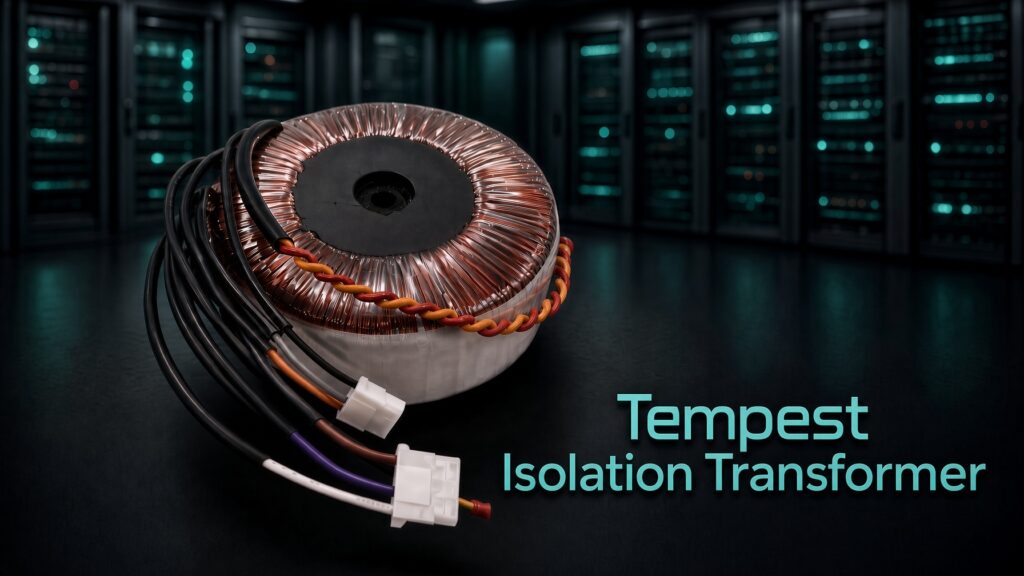
A compact, low-EMI toroidal isolation transformer aligns well with these constraints. It can be integrated into the power architecture of a modular SCIF without consuming excessive volume or introducing large external fields that complicate the rest of the design.
How Isolation Transformers Fit into a Broader TEMPEST Strategy
A CTTA may recommend multiple countermeasures depending on the threat assessment and the equipment inside the SCIF. These can include:
- Power line filters
- Signal line filters
- RF shielding of the perimeter
- Dielectric breaks on metallic penetrations
- Careful RED/BLACK separation
- Controlled grounding practices
An isolation transformer complements these measures. It provides a robust, passive galvanic break and, when shielded, additional attenuation of capacitive coupling. In many designs it becomes the primary means of establishing a cleaner power domain for sensitive loads while filters and shielding address remaining paths.
Designers should coordinate early with the CTTA and the accrediting official so that the isolation transformer is specified as part of a coherent strategy rather than added late as a corrective measure.
Practical Selection Considerations
| Design Question | Why It Matters | Typical Direction |
|---|---|---|
| What loads will the transformer serve? | Determines kVA rating and inrush handling | Size with margin for continuous and peak loads |
| Is electrostatic shielding required? | Affects high-frequency noise performance | Specify Faraday shield for SCIF use |
| How critical is external magnetic field? | Impacts nearby equipment and shielding needs | Prefer low-stray-field toroidal designs |
| Is the SCIF modular or permanent? | Influences size, mounting, and thermal constraints | Compact designs favor modular platforms |
| What documentation will accreditation need? | Supports design review and CTTA evaluation | Request clear isolation and shielding data |
FAQ
What is a SCIF isolation transformer? It is an isolation transformer specified for use in Sensitive Compartmented Information Facilities to provide galvanic isolation and, typically, electrostatic shielding that helps control conducted emissions and common-mode noise on power circuits.
Why are isolation transformers used in SCIFs? They break the direct conductive path between the upstream power source and the loads inside the SCIF, reducing ground loops and limiting one path by which compromising signals could leave the facility on power conductors.
Do ICD 705 or TEMPEST rules require isolation transformers? Requirements are driven by the overall risk assessment and CTTA recommendations rather than a single universal mandate. However, as expectations for true electrical isolation rise, isolation transformers are increasingly treated as a practical and expected element of the power architecture.
What is the advantage of a toroidal design? Toroidal isolation transformers generally produce lower external magnetic fields, occupy less volume for a given rating, and operate at higher efficiency than many conventional EI-core designs. These traits are valuable in compact modular SCIFs and in any facility where external fields must be minimized.
What is a Faraday shield and why does it matter? A Faraday (electrostatic) shield is a conductive layer placed between the primary and secondary windings and properly terminated. It reduces capacitive coupling so that high-frequency noise is less able to transfer across the transformer.
Can Bridgeport Magnetics supply custom SCIF isolation transformers? Yes. Bridgeport Magnetics designs and manufactures custom toroidal isolation transformers with galvanic isolation and electrostatic shielding, optimized for low EMI, compact size, and the requirements of secure facility and modular SCIF projects. All units are Made in the USA.
Final Thoughts
Power isolation is no longer a background detail in SCIF design. ICD 705 construction practices, TEMPEST evaluation, and the growth of modular and containerized facilities are pushing designers toward cleaner, more deliberate electrical separation. A properly specified SCIF isolation transformer provides galvanic isolation, supports electrostatic shielding, and, when executed as a low-field toroidal design, does so in a compact and efficient package.
For project teams facing higher isolation expectations, the combination of true galvanic separation, Faraday shielding, and low external EMI offers a practical foundation for meeting both technical and accreditation goals. Early coordination with the CTTA and clear specification of these features help ensure the power system supports, rather than complicates, the overall security architecture.
Product Callout Bridgeport Magnetics Custom Toroidal SCIF Isolation Transformers Galvanic isolation with Faraday shielding, low external EMI, compact high-efficiency construction, and Made-in-USA manufacturing for permanent and modular Sensitive Compartmented Information Facilities.