Single leg failures become much more common during the summer months. These partial outages leave customers with power on only half their circuits and create immediate pressure on utility crews to respond quickly. Understanding why single leg failures increase in summer, and what modern tools are available to fix them, helps utilities improve restoration times and reduce customer complaints.
What Is a Single Leg Failure?
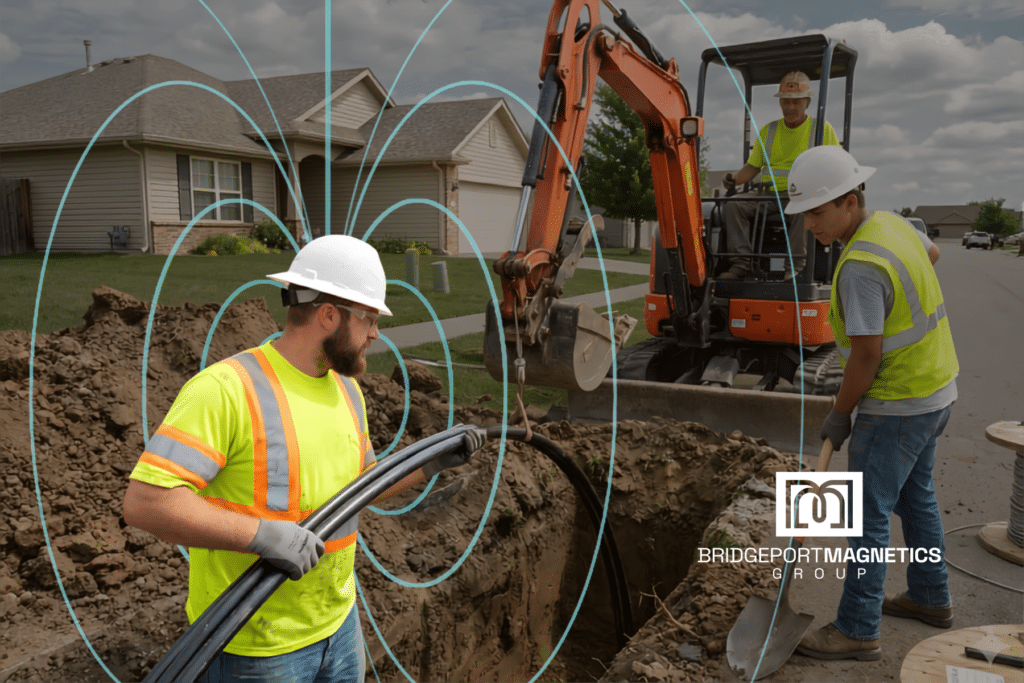
In a standard 120/240V residential service, power comes in on two hot legs plus a neutral. A single leg failure occurs when one of the hot legs is lost while the other hot leg and neutral stay energized. Customers lose 240V appliances and half of their 120V circuits. Voltage on the remaining leg can also swing, which risks damaging electronics and appliances.
This is different from a complete outage. The technical issue is usually an open hot leg caused by damaged underground cable, failed connectors, storm damage, or overload.
5 Reasons Single Leg Failures Spike in Summer
Summer conditions create multiple factors that increase single leg failures. Here are the five main reasons:
- High Air Conditioning Loads Sustained high current from air conditioners pushes underground cables and connections to their limits. Weak points heat up and eventually fail, often resulting in a single leg outage.
- Heat Stress on Underground Cables High temperatures cause underground cables to expand and contract repeatedly. Over time this degrades insulation and connectors, making single leg failures more likely during peak summer demand.
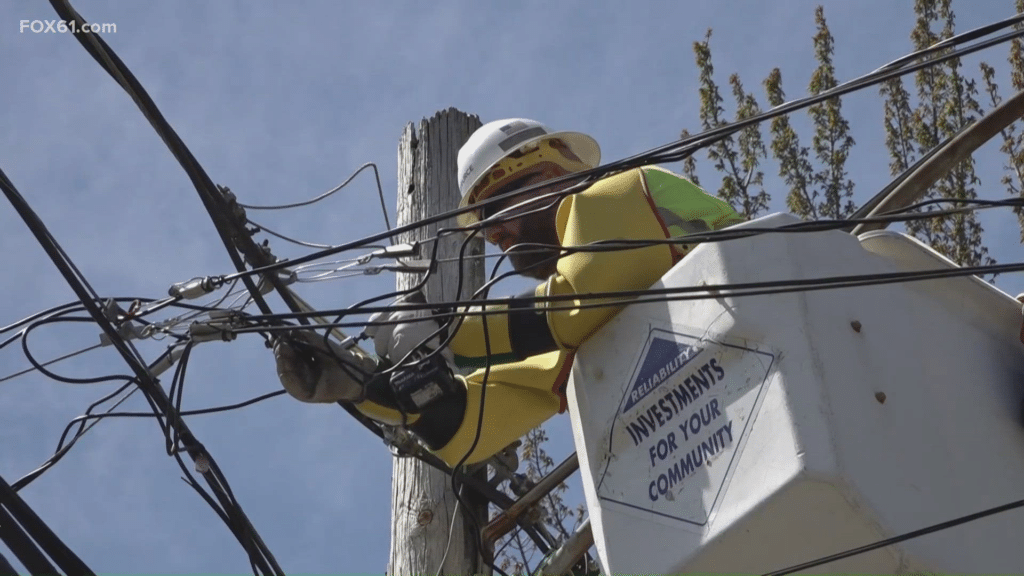
- Increased Storm Activity Thunderstorms, lightning, high winds, and flooding are more frequent in summer. These events damage both overhead and underground infrastructure and frequently cause single leg problems.
- Peak Demand Overloads Transformers and cables operate closer to or beyond their ratings for long periods during summer heat waves. This stress often leads to single leg failures before a complete outage occurs.
- Aging Underground Infrastructure Many underground residential distribution systems are now 30 to 50 years old. Summer heat and high loads accelerate the failure of these older cables and connectors.
These five factors together explain the clear seasonal increase in single leg failures between June and September.
Real-World Scenarios Where Single Leg Failures Are Common
| Scenario | Main Causes | Typical Customer Impact | Challenges for Crews | How Modern Tools Help |
|---|---|---|---|---|
| Summer Thunderstorms | Lightning, falling trees, wind damage | Scattered single-home and neighborhood outages | Wet conditions and difficult backyard access | Lightweight units that one lineman can deploy |
| Hurricanes and Tropical Storms | Storm surge, flooding, and widespread debris | Large numbers of single leg failures | Safety hazards make temporary lines risky | Meter-installed solution with no temporary lines |
| Peak Summer Heat Waves | Sustained high AC load on aging cables | Multiple single leg failures in older neighborhoods | High call volume and need for fast response | Quick meter connection reduces outage duration |
| Planned Summer Maintenance | Cable or transformer work during peak season | Planned single leg outages | Need to minimize customer impact | Fast install and removal |
Why Traditional Methods Struggle During Summer
Utilities have traditionally used temporary overhead jumper lines or older heavy service saver units to address single leg failures. Both approaches have clear limitations in summer conditions.
| Traditional Method | Limitations in Summer | Safety and Operational Drawbacks |
|---|---|---|
| Temporary Overhead Jumper Lines | Time-consuming to install in debris or wet areas | Creates new hazards in traffic and customer yards |
| Older Heavy Service Savers | Difficult for one person to move and position | Higher physical strain and slower deployment |
| Both Approaches | Require more coordination and crew time | Increased overtime costs and longer customer outages |
These limitations become especially costly when utilities are already handling high volumes of calls during summer storms or heat waves.
How Modern Temporary Power Restoration Improves Results
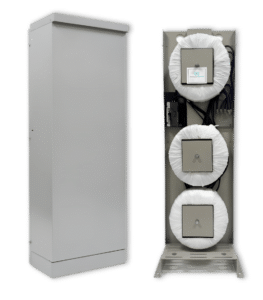
Modern temporary power restoration devices connect directly at the customer’s meter and regenerate the missing hot leg. This approach offers several operational advantages during summer single leg failures:
- Faster installation, often completed in 20 to 30 minutes
- No need to run temporary overhead lines across yards or streets
- Lighter and more maneuverable designs that one lineman can often handle
- Built-in safety features such as thermal protection and optional GFI
- Better performance in difficult access locations like backyards or rough terrain
These improvements allow crews to restore power faster while lowering both safety risks and operational costs.
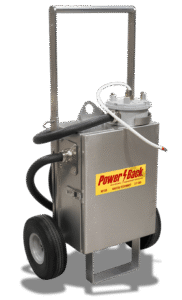
PowerBack: Built for Summer Single Leg Failure Response
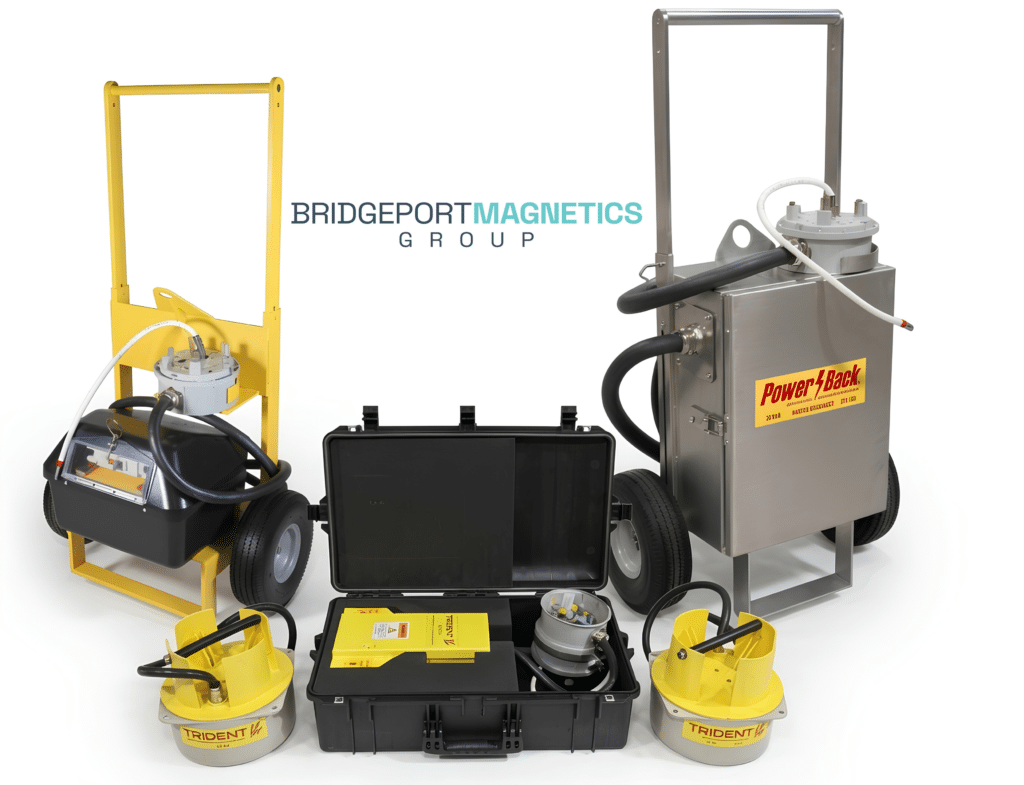
The PowerBack series was developed with direct input from linemen who regularly handle these exact summer conditions. Key advantages include:
- Lightweight design that many models allow one person to position even in residential backyards
- Rugged stainless steel construction with never-flat tires that perform well on grass, gravel, and uneven ground common after summer storms
- Quick meter-installed connection that eliminates the need for temporary overhead lines
- USA-made quality with a focus on field durability and reliability
- Safety features including thermal protection, voltage and current monitoring, and optional GFI protection
These features make the PowerBack especially effective when single leg failures spike during summer.
Comparison of Traditional Methods vs Modern Temporary Power Restoration
| Factor | Traditional Temporary Lines or Heavy Units | Modern Lightweight Temporary Power Restoration | Clear Advantage |
|---|---|---|---|
| Installation Time | Longer | Typically 20 to 30 minutes | Modern |
| Crew Requirements | Often requires multiple people | Many jobs can be completed by one lineman | Modern |
| Need for Temporary Overhead Lines | Yes | No | Modern |
| Access in Difficult Locations | Limited | Excellent | Modern |
| Safety Risk | Higher | Lower | Modern |
| Physical Strain on Crew | Higher | Significantly reduced | Modern |
| Performance in Summer Storms | Challenging | Strong | Modern |
FAQ
Why do single leg failures increase in summer? Higher electrical loads from air conditioning, heat-related degradation of underground cables, and more frequent thunderstorms all contribute to the seasonal spike.
What is the difference between a single leg failure and a lost neutral? A single leg failure causes partial power and possible voltage swings. A lost neutral can create more dangerous over-voltage on 120V circuits. Both need prompt attention.
How does a modern temporary power restoration device fix a single leg failure? It connects at the meter and uses the remaining good conductors to restore the missing hot leg, giving customers balanced 120/240V power until permanent repairs are finished.
Why is meter-installed restoration better than temporary overhead lines? It is faster, removes safety hazards in yards and streets, and lowers liability, especially during active storms.
Can one lineman handle a PowerBack in summer conditions? Yes. The lightweight design and wheeled cart make it practical for a single crew member in most residential and light commercial settings.
How long can these devices stay connected? They are intended for temporary use while permanent repairs are scheduled, typically a few days to a couple of weeks.