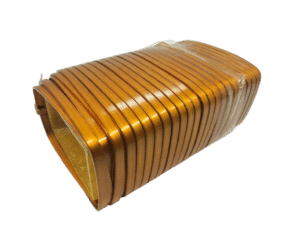

IEC 60601 Leakage Current Requirements for Medical Isolation Transformers
Every piece of medical electrical equipment connected to a patient creates a potential risk. Even small amounts of leakage current can flow through insulation, ground paths, or capacitive coupling. In most environments this goes unnoticed, but in medical settings, especially when equipment contacts the body or is used during invasive procedures, that same current can cause pain, muscle stimulation, or even cardiac arrhythmia.
This is why the IEC 60601-1 standard sets strict limits on leakage current. These requirements are not theoretical. They exist because real patients have been harmed by equipment that failed to control leakage current properly.
A medical isolation transformer is one of the most effective ways to reduce leakage current and help equipment meet these safety standards. Unlike a standard power supply or non-isolated transformer, a medical isolation transformer breaks the direct electrical connection between the power source and the medical device. This isolation significantly lowers the risk of current flowing through a patient.
Understanding the IEC 60601 leakage current requirements, and how isolation transformers help satisfy them, is essential for hospitals, OEMs, dental practices, and anyone responsible for specifying or maintaining medical equipment.
Why Leakage Current Matters in Patient Care
In a normal commercial or residential setting, small leakage currents are common and rarely cause problems. However, when medical equipment is connected to a patient, the situation changes dramatically.
Patients may already be in a vulnerable state. They may be connected to multiple devices, have compromised skin integrity, or be undergoing procedures that involve direct contact with internal tissues or the heart. In these conditions, even microamp-level currents can become dangerous.
Leakage current can enter the body through applied parts such as sensors, electrodes, probes, or handpieces, or through the chassis if grounding is compromised. The consequences range from discomfort to ventricular fibrillation, depending on the current level, pathway, and duration.
The IEC 60601-1 standard was developed specifically to address these risks. It defines maximum allowable leakage current based on the type of patient contact and the operating condition of the equipment.
IEC 60601 Leakage Current Limits Explained
The standard classifies applied parts according to the level of patient contact and sets different leakage limits accordingly.
Here are the key patient leakage current limits under IEC 60601-1:
| Applied Part Type | Normal Condition | Single-Fault Condition | Common Applications |
|---|---|---|---|
| Type B (non-cardiac) | 100 µA | 500 µA | General monitoring, diagnostic equipment |
| Type BF (body floating) | 100 µA | 500 µA | Equipment with conductive patient contact |
| Type CF (cardiac floating) | 10 µA | 50 µA | Direct cardiac contact (catheters, surgery) |
These limits represent the maximum current that should be able to flow from the equipment into the patient. Equipment must meet these values both during normal operation and when a single fault occurs, such as loss of ground or insulation failure.
Normal Condition vs Single-Fault Condition
The standard requires equipment to remain safe in two different states:
-
- Normal Condition: All protective systems are functioning. Leakage current must stay very low.
-
- Single-Fault Condition: One protective measure has failed. The standard allows a higher leakage limit, but it must still remain safe for the patient.
This distinction is important. Many devices can meet leakage requirements under normal conditions but exceed safe limits when a fault occurs. A properly designed medical isolation transformer helps maintain low leakage even when a fault is present because it removes the direct electrical connection to the power source.
How Medical Isolation Transformers Reduce Leakage Current
Standard power supplies and non-isolated transformers allow some leakage current to flow through capacitive coupling between the primary and secondary windings, the core, and the enclosure. In sensitive medical applications, this coupling can push leakage above acceptable levels.
A medical isolation transformer reduces leakage in several ways:
-
- It provides galvanic isolation, eliminating the direct conductive path between shore or utility power and the medical device.
-
- Electrostatic shielding between windings blocks high-frequency noise and reduces capacitive coupling.
-
- The toroidal core design creates a more efficient magnetic path with lower stray fields than traditional EI-core transformers.
-
- High-quality insulation and potted construction further minimize unintended current paths.
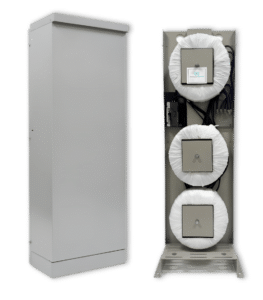
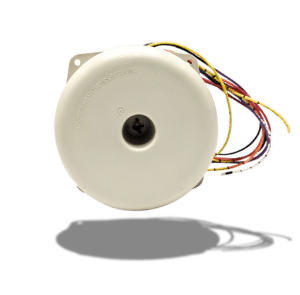
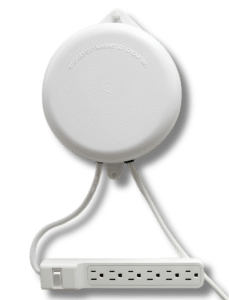
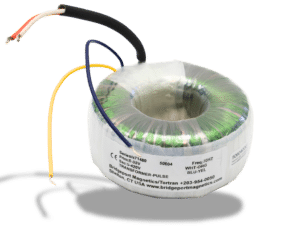
Bridgeport Magnetics designs its IsoPuck series with these factors in mind. The IP600/60 (600VA Medical Isolation Transformer) and IP800/50 (800VA Medical Isolation Transformer)models, for example, are frequently specified in dental chairs, patient monitoring systems, and other equipment where low leakage current is required.
Advantages of Using a Medical Isolation Transformer
Using a properly designed medical isolation transformer offers several practical benefits:
-
- Significantly lower patient leakage current compared to non-isolated power supplies.
-
- Improved performance under single-fault conditions.
-
- Reduced common-mode noise, which can benefit sensitive monitoring and diagnostic equipment.
-
- Easier path to IEC 60601-1 and UL 60601-1 compliance for OEMs.
-
- Clear separation between the facility power system and the medical device.
Limitations and Considerations
While medical isolation transformers are highly effective, they are not the only factor in achieving compliance. Other considerations include:
-
- The overall design of the medical device
-
- Proper grounding strategy
-
- Quality of internal power supplies and insulation
-
- Correct classification of applied parts (Type B, BF, or CF)
-
- Final system-level testing
An isolation transformer makes compliance easier, but it does not replace the need for proper device design and testing.
Side-by-Side Comparison
| Factor | Without Medical Isolation Transformer | With Medical Isolation Transformer |
|---|---|---|
| Galvanic isolation | None | Complete |
| Patient leakage current | Often higher | Significantly lower |
| Performance under single fault | More variable | More consistent |
| Common-mode noise rejection | Limited | Strong |
| Ease of achieving IEC 60601 compliance | More difficult | Easier |
| Typical applications | Non-patient contact equipment | Patient-connected or sensitive devices |
When Does Equipment Need a Medical IEC 60601-1 Isolation Transformer
Not every medical device requires an isolation transformer. However, it becomes highly valuable in these situations:
-
- Equipment with direct or conductive patient contact, especially Type BF or CF applied parts
-
- Devices used in cardiac procedures or near the heart
-
- OEM products that have struggled to meet leakage current limits during testing
-
- Equipment installed in older facilities with questionable grounding
-
- Dental chairs, delivery systems, and sterilization equipment
-
- Patient monitoring and diagnostic devices where low noise is important
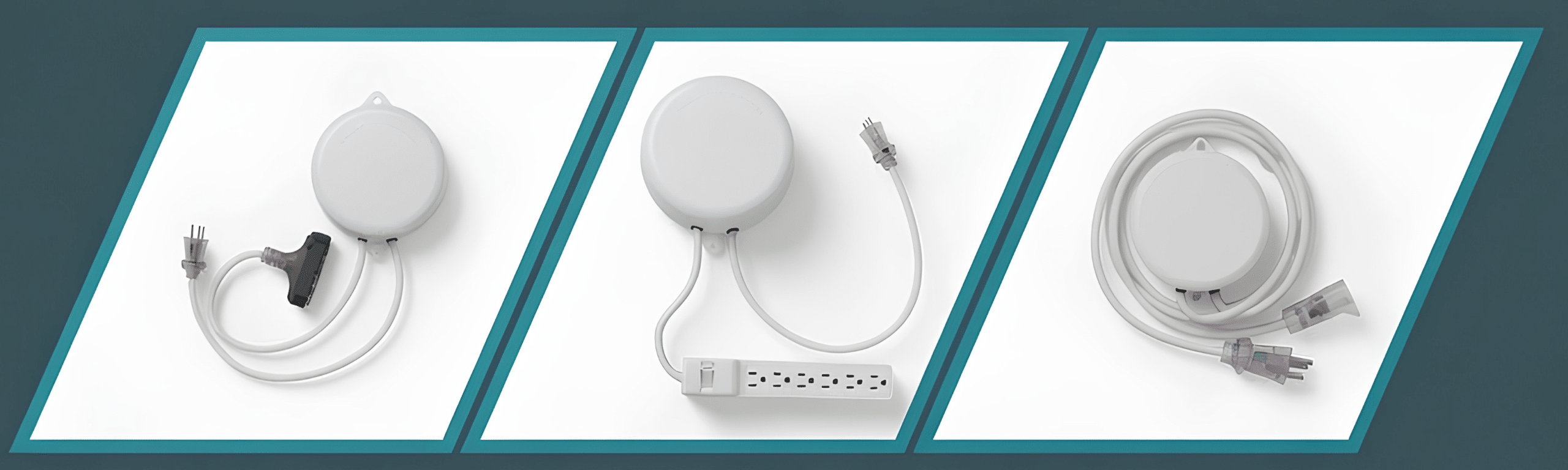
In many of these cases, adding a medical isolation transformer such as the IP600/60 (600VA Medical Isolation Transformer) or IP800/50 (800VA Medical Isolation Transformer) provides a practical and reliable way to achieve the required safety performance.
How to Evaluate a Medical Isolation Transformer
When specifying or selecting a medical isolation transformer, consider:
-
- Published leakage current performance under both normal and single-fault conditions
-
- Presence of electrostatic shielding
-
- Certification or test reports supporting IEC 60601-1 or UL 60601-1
-
- Appropriate VA rating for the expected load
-
- Physical size, mounting options, and thermal performance
-
- Customization capability for voltage, leads, outlets, or thermal protection
Not all isolation transformers perform equally. Design quality and construction details matter.
Product Callout Bridgeport Magnetics IsoPuck Series Compact toroidal medical isolation transformers from 200 VA to 3000 VA. Electrostatic shielding helps achieve low leakage current performance. Models such as the IP600/60 (600VA Medical Isolation Transformer) and IP800/50 (800VA Medical Isolation Transformer) are commonly used in dental and hospital applications where IEC 60601 compliance is required. UL 60601-1 and IEC 60601-1 compliant. Custom configurations available.
Request a quote or speak with our engineers
FAQ
What is patient leakage current? Patient leakage current is the current that could flow from medical equipment into a patient through applied parts or in the event of a fault. IEC 60601-1 sets strict maximum limits to protect patients from electric shock.
Why are the limits so much stricter for Type CF equipment? Type CF equipment may come into direct contact with the heart. Even very small currents can trigger dangerous arrhythmias, so the allowable leakage is extremely low.
Can I use a standard isolation transformer for medical equipment? No. Medical applications require transformers that have been designed and tested to meet the specific leakage current and safety requirements of IEC 60601-1.
How does a toroidal medical isolation transformer help reduce leakage? Toroidal designs generally produce lower stray magnetic fields and reduced capacitive coupling. Adding electrostatic shielding between windings further improves leakage performance.
Do I still need to test the complete device after adding an isolation transformer? Yes. Final compliance testing of the finished medical device is still required. However, using a properly designed medical isolation transformer makes it significantly easier to meet the leakage current limits.