Instrument Transformers
Current Transformers & Metering CTs
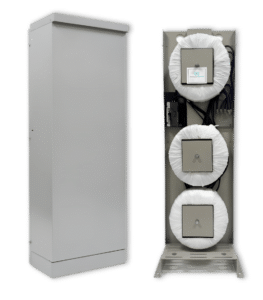
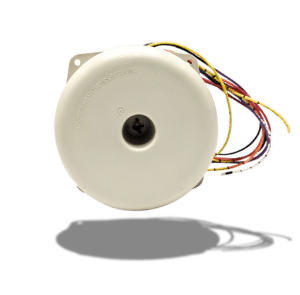
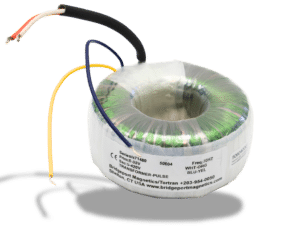
Precision toroidal current transformers for revenue metering, monitoring, and protection - engineered and built to your exact ratio and accuracy class in Shelton, Connecticut since 1982.
Overview
Current Transformers Built for Accurate Measurement
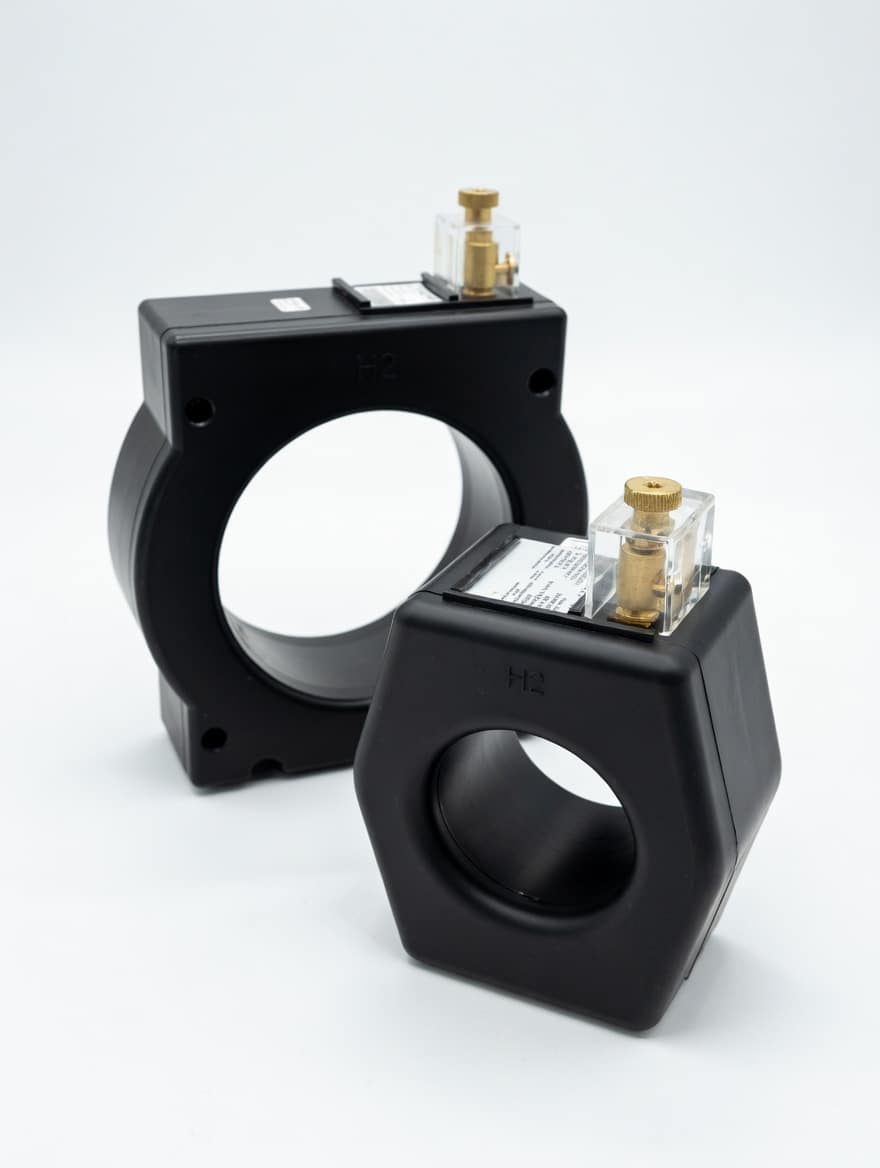
Current transformers (CTs) scale a large primary current down to a low, standardized secondary output so meters, relays, and monitors can read a power line safely. Since 1982, Bridgeport Magnetics has designed and built high-precision toroidal current-sensing and metering transformers - standard models and fully custom units - for utilities, OEMs, data centers, and industrial power systems.

Fundamentals
What Is a Current Transformer, and How Does It Work?
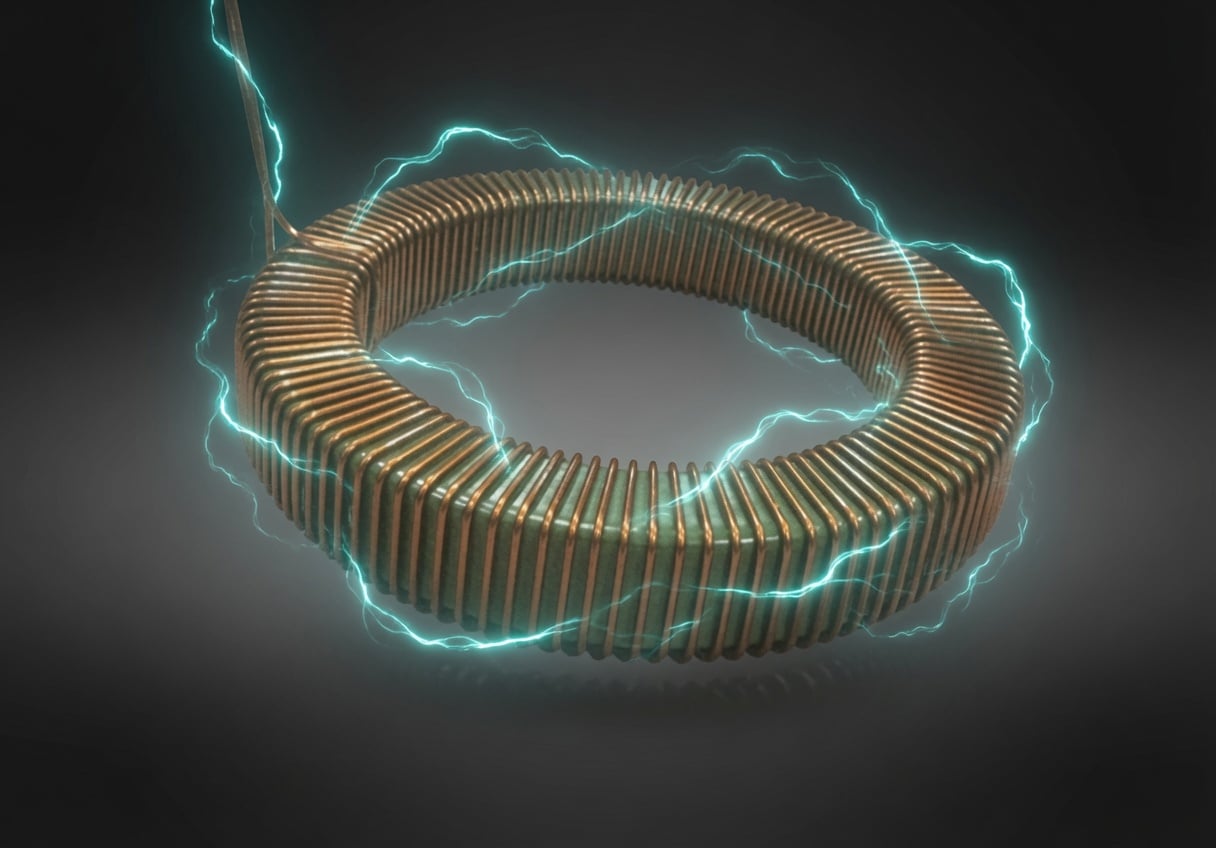
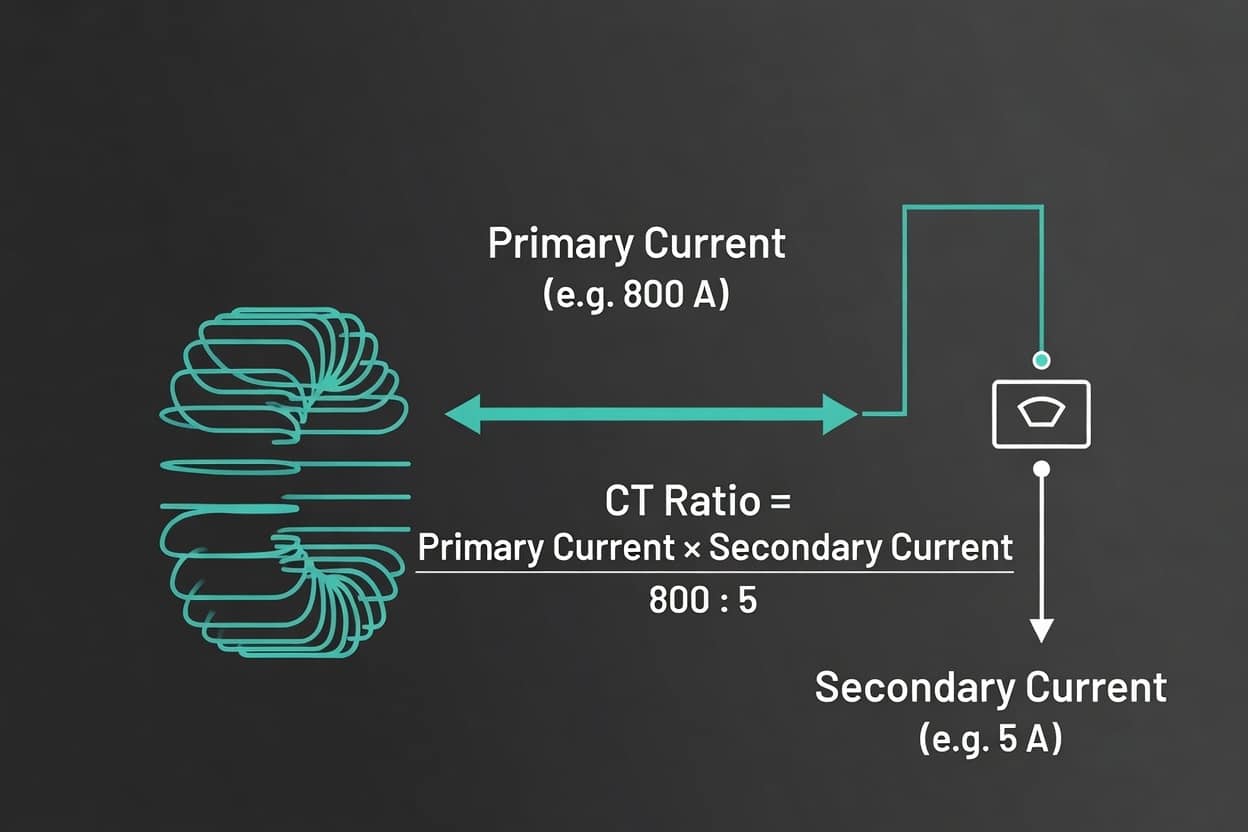
A current transformer produces a secondary current proportional to the current in its primary - usually a single conductor or bus bar passed through the CT's window. That current creates a magnetic field; the core channels the flux through the secondary winding, inducing a smaller, precisely scaled current instruments can safely read. The relationship is fixed by the turns ratio: a 500:5 CT delivers 5 A at the secondary when 500 A flow through the primary.
Accuracy depends on three things - core material and geometry, the connected burden (VA), and the rating factor (how far above nominal it can measure within class). Safety note: never open a CT secondary while primary current is flowing - an open secondary can develop dangerous high voltage.
Accuracy
Current Transformer Accuracy Classes
A CT's accuracy class caps the ratio and phase-angle error at rated conditions. Metering favors tight accuracy at load; protection favors linearity at fault currents. Classes are defined by IEEE C57.13 (ANSI) and IEC 61869-2. Bridgeport builds to the class your meter or specification requires.

Specifying
Current Transformer Ratios & Sizing
Selecting a CT starts with the ratio - the primary current you need to measure, scaled to a standard secondary output. From there, sizing accounts for window size, burden, rating factor, and accuracy class. Bridgeport builds a broad standard line and fully custom ratios, from compact current-sensing units to large-window bus-bar metering CTs.
- Determine max primary current — continuous load plus rating-factor headroom.
- Pick the secondary standard — 5 A, or a scaled voltage output for electronic monitoring boards.
- Set the ratio — primary ÷ secondary (e.g., 800 A ÷ 5 A → 800:5).
- Confirm the burden — total VA of meter + wiring + relays must stay within rating.
- Choose the accuracy class — billing = tighter; monitoring = looser.
- Verify window / mounting fit around the conductor or bus bar.
Construction
Toroidal (Window) vs. Wound Current Transformers
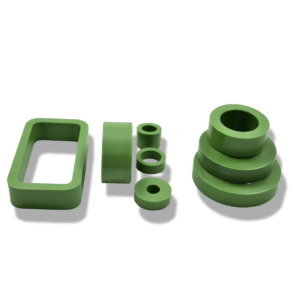
Construction directly affects accuracy, size, and EMI. Bridgeport specializes in toroidal, closed-core designs.
Which Type
Metering CTs vs. Protection CTs
They look similar but are engineered for opposite priorities.
Metering CTs
Optimized for accuracy at normal load. High-permeability cores hold a tight class across the metering range and saturate early above rated current to protect meters during a fault. Priority: trustworthy measurement for billing and energy management.
Protection CTs
Optimized to stay linear at high fault currents so relays receive a faithful signal during over-current events. High accuracy limit factor, saturate much later. Priority: reliable reproduction of fault current for protection relaying.
Applications
Where Bridgeport Current Transformers Are Used
Utilities & Substations
Revenue metering, load monitoring, and protection.
Data Centers & PDUs
Branch-circuit monitoring and power quality; compact, low-EMI toroidal CTs fit tight panels.
Industrial Switchgear
Motor current monitoring, overload protection, and load management.
Renewable Energy
Solar inverter and wind-system current measurement.
Power-Monitoring OEMs
Voltage-generating CTs on PC boards with flying leads or pinned carriers.
Temporary Power
CT integration with Bridgeport PowerBack and Trident systems.
Why Bridgeport
Why Choose Bridgeport Magnetics for Current Transformers
Toroidal specialists since 1982
Closed-core precision winding is our core competency, not a sideline.
Full range of ratios & classes
Standard line plus fully custom designs, built to your exact primary, secondary, burden, and class.
Made in the USA
Engineered, wound, and tested in Shelton, Connecticut — Buy-American eligible.
Flexible finishing
Tape, resin dip, epoxy potting, or full epoxy casting; single or multi-phase encapsulated assemblies.
Individually tested
Bar-coded and serial-marked; test reports stored electronically and available on request.
Direct engineering support
Talk to the people who design and build your CT.
FAQ
Frequently Asked Questions
A current transformer (CT) is an instrument transformer that scales a large primary current down to a small, standardized secondary current — typically 5 A — so meters, relays, and monitors can measure it safely. The scaling is fixed by the CT's turns ratio.
Primary current through the CT's window creates a magnetic field. The core concentrates that flux through the secondary winding, inducing a proportional, lower current. A 500:5 CT outputs 5 A when 500 A flow through the primary.
The CT ratio is the fixed relationship between primary and secondary current — for example, 800:5 means 800 A in the primary produces 5 A at the secondary. Meters use this known ratio to reconstruct the true primary current.
A metering CT is optimized for accuracy at normal load and saturates early to protect meters during faults. A protection CT stays linear at high fault currents so relays get a faithful signal. Metering prioritizes precision; protection prioritizes fault reproduction.
Match the class to the application. Revenue and utility billing typically require tighter classes (IEC 61869-2 / IEEE C57.13); general metering and energy management use looser classes; load monitoring and protection use protection classes. Bridgeport builds to your required class.
A toroidal CT's closed core has no air gap, so magnetic flux distributes uniformly. That produces low phase-angle error, excellent linearity, low VA burden, and minimal EMI — the characteristics tight metering accuracy classes demand.
Yes. Bridgeport manufactures standard and fully custom CTs across a wide range of ratios, window sizes, burdens, and accuracy classes, with single or multi-phase encapsulated options — all built and tested to spec in Shelton, CT.
Get a Quote on Your Current Transformer
Tell us your primary current, secondary output, burden, accuracy class, and window or mounting requirements - our engineers will spec the right toroidal CT. Standard models and fully custom designs, built and tested in the USA.